Packaging automation questions
Direct, practical answers for buyers, engineers, production teams and procurement staff planning packaging machinery or a connected line.
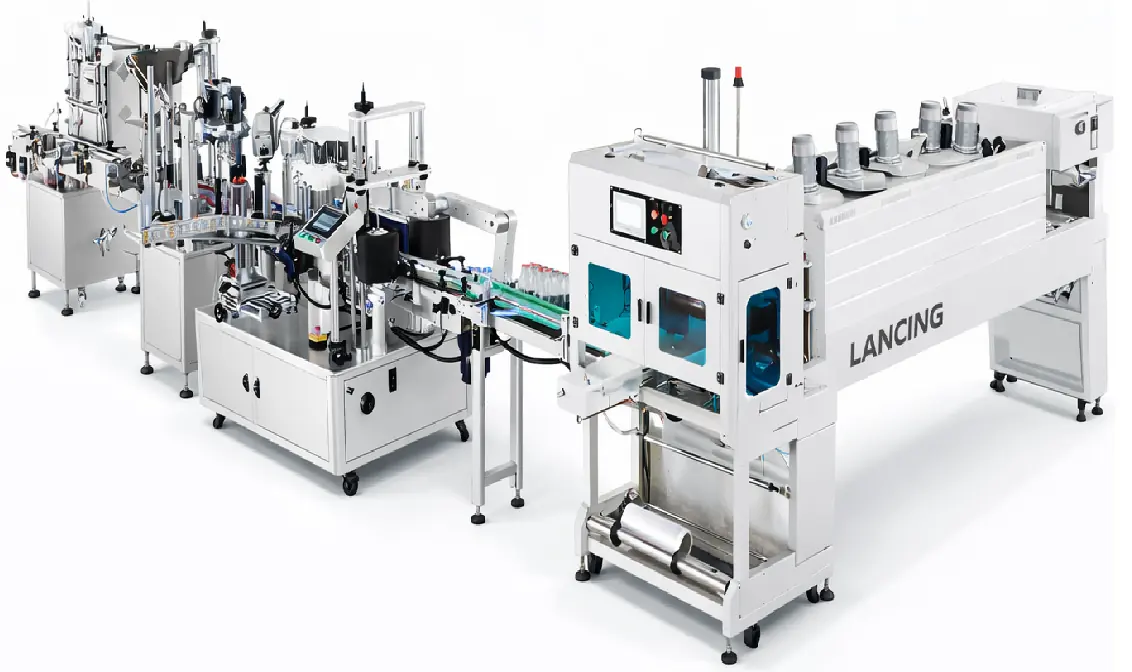
Start with the decision, then confirm it with your actual product and pack.
The pages below explain the factors that change a machinery answer. They do not replace representative samples, a site review or an agreed acceptance test where the application requires them.
Useful information to have ready
- Product behaviour and the approved packaging components.
- Normal batch sizes, target output and format range.
- Current process, layout, utilities and operator tasks.
- Quality checks, cleaning, changeover and integration needs.
Choosing the automation level
Open the answer that matches the decision you need to make.
Filling products consistently
Open the answer that matches the decision you need to make.
Matching packs and components
Open the answer that matches the decision you need to make.
How do closures and containers match a capper?
Review application method, neck finish, support and feeding.
Read more →How do containers and labels match a labeller?
Review geometry, label construction, winding and placement.
Read more →VFFS or premade pouch packing?
Compare material supply, format creation, dosing and sealing.
Read more →Designing the connected line
Open the answer that matches the decision you need to make.
Turn the answer into an application review
Send the product, container, closure, label or film details together with the target output and current process. Lancing can identify the machinery category, samples and next engineering checks needed.
Questions that continue after the machinery category is chosen.
Use these deeper answers to define project requirements, operational evidence, format control and long-term support.
How do you write a packaging machinery URS?
Set the outcome, products, formats, interfaces and acceptance evidence.
How should packaging line OEE be planned?
Define states, ideal rates, counts, stop reasons and data ownership.
How should coding and traceability be integrated?
Connect job data, the physical pack, verification, rejection and records.
How should recipes and changeovers be managed?
Align physical formats, electronic settings and release checks.
How should spares and obsolescence be planned?
Prioritise critical recovery parts, backups and lifecycle evidence.
How do you build an automation business case?
Compare the verified current process, complete scope, benefits and risk.
Open the detailed guide that owns each question.
These routes cover feasibility, responsibilities, training, ramp-up and service without repeating the same answer across several pages.
Is the proposed automation technically feasible?
Review current-state evidence, site constraints, trials and concept options.
Who supplies and tests each packaging line interface?
Define battery limits for machinery, controls, utilities, guarding and acceptance.
What should operator training and handover include?
Separate operating, changeover, cleaning, maintenance and technical responsibilities.
What happens after site acceptance testing?
Plan controlled ramp-up, production evidence, change control and action closure.
What information is needed for servicing or fault support?
Prepare machine identity, symptoms, photographs, history and production consequences.