UK packaging automation projects01494 623015sales@lancinguk.com
Integrated packaging lines

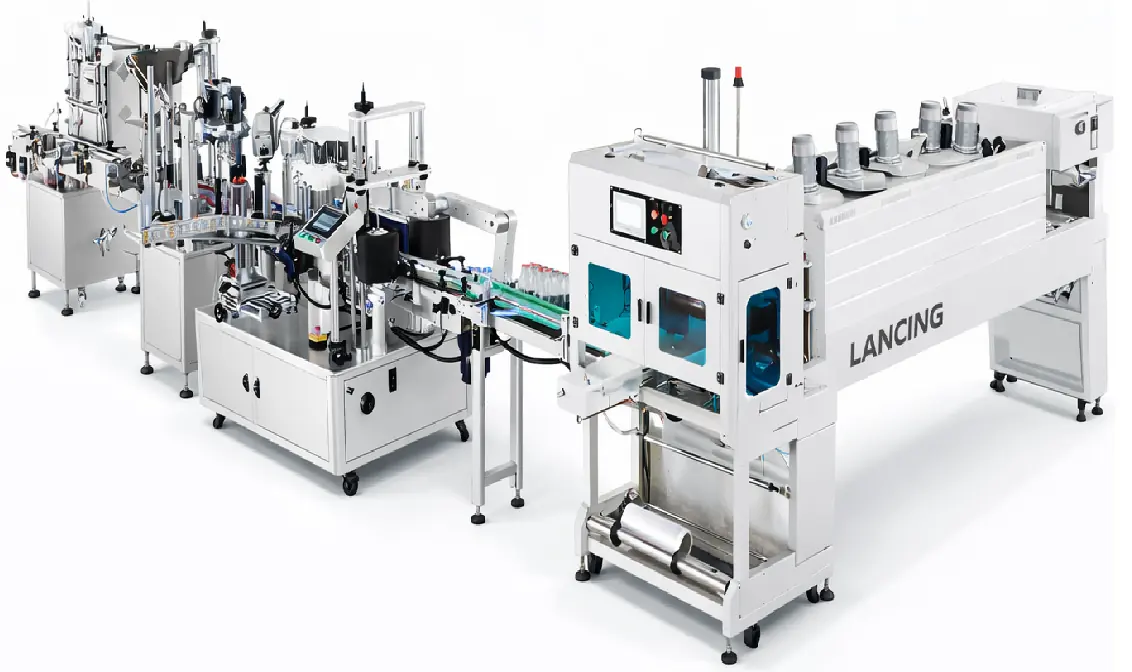
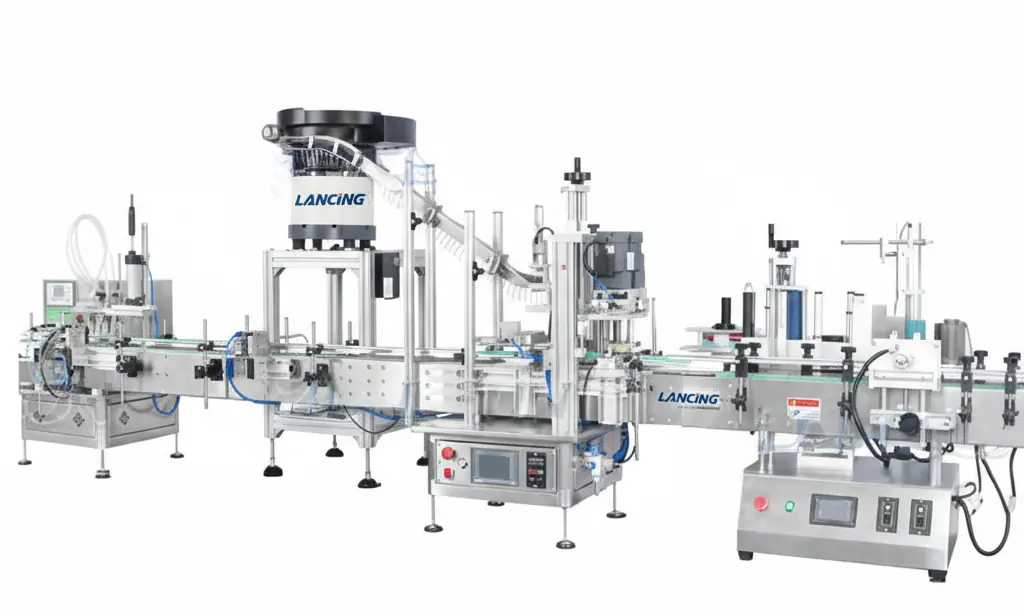
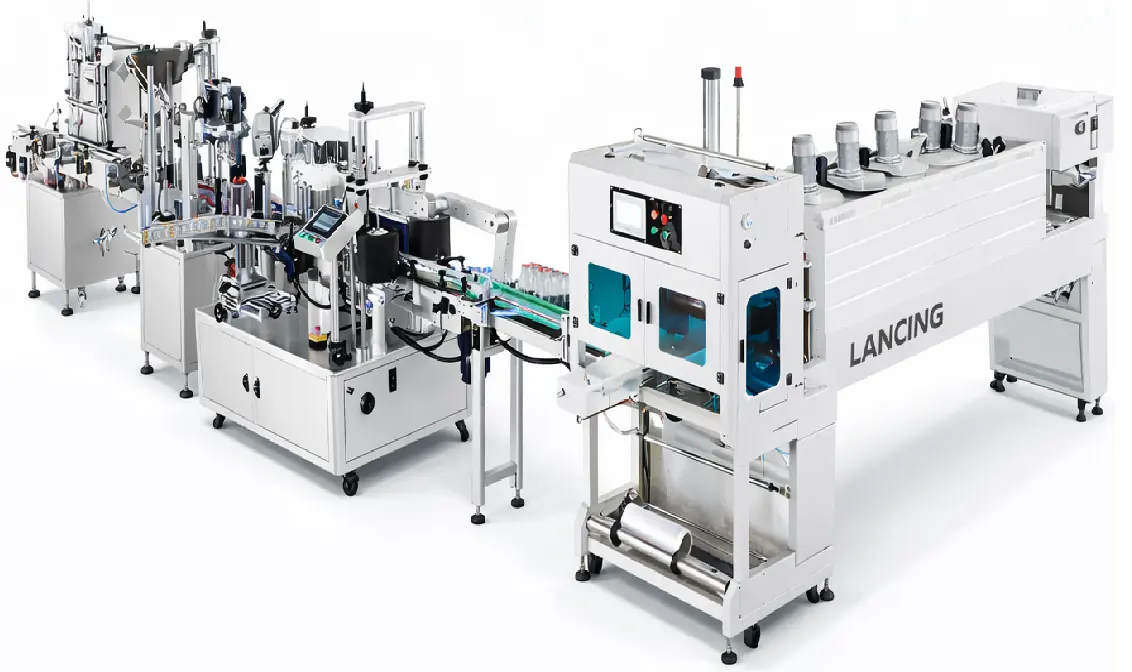
Complete packaging lines

Complete lines work best when all machines are specified together around target output and available floor space.

Complete packaging lines
Buyer information

What to consider before selecting equipment.

These notes help match the machinery specification to the product, pack format and output required.

Define the pack and product first

Complete packaging lines should be selected around the actual product sample, container dimensions, closure or label specification and how the operator will load or unload the line.

  • Provide filled and empty samples before final machine selection.
  • Confirm whether the machine must run semi-automatically or automatically.
  • Review cleaning, changeover and maintenance access at quotation stage.

Match output to a realistic line layout

The best result normally comes from balancing each process rather than buying one fast machine that is restricted by upstream or downstream handling.

  • Confirm containers per minute or packs per hour.
  • Allow space for infeed, accumulation, rejects and operator access.
  • Check utilities including compressed air, power and extraction where required.

Use the enquiry to reduce risk

A short technical review can identify whether a standard machine is suitable or whether tooling, guarding, conveyors or integration changes are required.

  • Share photos or videos of the current process.
  • State the product range and expected future formats.
  • Ask for any sample testing needed before order.

Speak to Packaging Automation UK

Send product and container details and we will suggest the closest machine style, whether a semi-automatic machine, standalone automatic machine or integrated line is the better starting point.

Send an enquiry
What information is needed for complete packaging lines?

The key details are product type, pack dimensions, target output, accuracy or finish requirement, utilities, available space and whether the process is manual, semi-automatic or fully automatic.

Can complete packaging lines be integrated into a line?

In many cases yes. Integration normally depends on conveyor height, pack stability, available control interfaces, guarding requirements and the upstream/downstream machinery.

How quickly can I get advice?

Send product details, pack photos and the required output through the enquiry form and the team can advise on the closest suitable machinery type.

Complete-line scope

Create one controlled definition of the finished output and every included interface.

A complete packaging line is a project boundary, not simply a list of machines. The scope should identify who owns performance across the connected processes.

Start with the finished-pack condition

Define what a conforming filled, closed, sealed, coded, labelled and discharged pack looks like for each approved format.

Name the system boundaries

Identify incoming product and components, site services, operator tasks, third-party equipment, finished-goods discharge and data interfaces.

Agree connected acceptance

The protocol should test normal production, controlled stops, recovery, accumulation and the quality condition after each process.

Line project control points

Approved format matrixProducts, packs, closures, labels and films included in the scope.
Layout and interfacesMachine positions, transfers, heights, controls, guarding and access.
Performance definitionRequired output pattern and conditions, with exclusions and permitted interventions.
Acceptance protocolMaterials, run sequence, observations, records and authorised witnesses.
HandoverDocumentation, settings, training, spares, actions and support route.
Buyer questions

Complete packaging line questions.

Detailed line planning should avoid overlap between equipment packages and make one party responsible for each interface.

Who owns the output of a complete line?

The contract and interface schedule should explicitly name the responsible party and the conditions under which output is assessed.

Should every machine have spare capacity?

Line balance should use realistic cycle behaviour and buffers; arbitrary spare capacity does not replace a connected design.

What should be included in FAT?

Use the agreed protocol, representative materials and included formats to check functions, quality conditions, interfaces and recovery before dispatch where practical.

What changes at SAT?

Site services, installation, local interfaces, operator involvement and real production conditions can be checked after installation.

How are third-party machines handled?

Record ownership of mechanical, electrical, safety and software interfaces, plus the data and attendance required from each supplier.

Where can I find deeper complete-line guidance?

Use the Lancing resource map to reach the Packaging Lines website, which owns detailed line-planning and acceptance content.

Prepare a useful machinery enquiry

Provide a process sequence, site layout, approved formats and a clear description of the required finished output.

FAT and SAT evidence

Test the complete line as a connected production method.

The acceptance plan should distinguish what can be demonstrated before dispatch from what depends on the customer site, final utilities, retained equipment and production personnel.

Finished-pack conditionAgree the checks for fill or dose, closure or seal, label and code presentation, pack integrity and discharge condition for each included format.
Normal connected runningUse representative materials and the approved process sequence to observe transfers, replenishment, operator tasks and good finished output.
Starve and block responseDemonstrate the agreed behaviour when upstream supply is unavailable or downstream equipment cannot accept more packs.
Format changeIdentify required parts, settings, tools, recipes, inspections and operator actions, together with the condition required before production restarts.
Fault, reject and recoveryCheck representative faults, reject handling, safe access, reset authority and the sequence for returning the complete line to controlled operation.
Site-dependent interfacesReserve SAT checks for final utilities, floor and access conditions, retained machinery, local data connections and other interfaces unavailable at factory test.
Documentation and settingsConfirm the included manuals, drawings, approved format information, recorded settings, maintenance points and action-closeout record.
Operator and maintenance handoverInclude normal running, shutdown, changeover, cleaning, routine checks, fault response and the route for aftercare support.
Single project record

Keep the scope, layout, interfaces and acceptance method aligned.

A line can become untestable when the proposal, drawings, control description and acceptance protocol use different assumptions. Changes should be reflected across the controlled project record.

Scope and format matrix

What is included, what is excluded, which formats are approved and which party supplies every product and packaging component.

Layout and interface schedule

Machine positions, transfers, control states, guarding boundaries, utilities, data, retained machinery and third-party responsibilities.

Acceptance and handover record

Test sequence, observations, interventions, witnesses, open actions, approved settings, documentation and aftercare route.

Complete-line scope

Define the whole production outcome and every supplier interface.

A complete packaging line combines individual processes into one operating system. The scope should identify what enters the line, what leaves it, how operators interact with it and how each process is checked and recovered.

Balance the processes

Use representative sustained demand, refill activity, changeovers and quality checks so one headline machine rate does not define the complete line.

Control interfaces

Include product transfer, conveyors, blocked and starved states, safety zones, coding, inspection, rejection and data ownership.

Accept the delivered system

Plan factory and site evidence for pack quality, line states, recovery, changeover, documentation and training.

Information to prepare

  • Complete product and format schedule.
  • Required line boundary from infeed to discharge.
  • Operator loading, replenishment and packing tasks.
  • Third-party machinery and customer-supplied systems.
  • Line-level acceptance and handover evidence.
Complete-line questions

Questions about output, bottlenecks, inspection and acceptance.

A complete line should be specified as a connected process with defined interfaces and evidence, not as a list of unrelated machine speeds.

How is the required line output calculated?

Required line output should be based on saleable packs over the available production time, allowing for planned changeovers, cleaning, replenishment, quality checks and realistic operating interruptions. State both the desired net production result and the test conditions for any machine or line-rate demonstration so suppliers are comparing the same requirement.
How should rejects and quality checks be planned?

Define what is inspected, where the decision is made, how suspect product is tracked, the reject method, confirmation of reject, bin capacity and what happens when the reject path is unavailable. Manual checks should also be included in the line balance, with clear responsibility for sampling, records and release.

What is the slowest-machine effect?

The slowest-machine effect describes how the sustained output of a connected line is limited by its effective constraint, which may be a process machine, transfer, manual task, inspection step or recovery from minor stops. Headline cycle rates do not by themselves show how the complete line will perform under representative conditions.

What should a complete packaging line acceptance plan cover?

A complete-line acceptance plan should cover the agreed products and formats, scope boundaries, setup condition, test duration, observable results, quality checks, fault and recovery demonstrations, documentation and treatment of open actions. Factory and site tests should be distinguished because utilities, upstream supply and final production conditions may differ.

Continue your packaging automation research

Use the related guidance below to compare the next decision, then send the actual product, pack and production information when you are ready to discuss a suitable machine or integrated line.

Operate the delivered line

Plan how formats, losses and lifecycle support will be controlled.

A complete line needs more than connected machinery. The operating method should keep product recipes, line states, quality evidence, backups and recovery parts aligned with the installed system.

CallContact