UK packaging automation projects01494 623015sales@lancinguk.com
Capping machinery buyer guide

Capping machines UK

Choose capping machinery around cap type, neck finish, torque requirement and production speed.

Capping machines UK
Buyer information

What to consider before selecting equipment.

These notes help match the machinery specification to the product, pack format and output required.

Define the pack and product first

Capping machines UK should be selected around the actual product sample, container dimensions, closure or label specification and how the operator will load or unload the line.

  • Provide filled and empty samples before final machine selection.
  • Confirm whether the machine must run semi-automatically or automatically.
  • Review cleaning, changeover and maintenance access at quotation stage.

Match output to a realistic line layout

The best result normally comes from balancing each process rather than buying one fast machine that is restricted by upstream or downstream handling.

  • Confirm containers per minute or packs per hour.
  • Allow space for infeed, accumulation, rejects and operator access.
  • Check utilities including compressed air, power and extraction where required.

Use the enquiry to reduce risk

A short technical review can identify whether a standard machine is suitable or whether tooling, guarding, conveyors or integration changes are required.

  • Share photos or videos of the current process.
  • State the product range and expected future formats.
  • Ask for any sample testing needed before order.
Related equipment

Continue comparing suitable machinery.

Follow these related pages to narrow the machinery type and prepare an enquiry.

Speak to Packaging Automation UK

Send product and container details and we will suggest the closest machine style, whether a semi-automatic machine, standalone automatic machine or integrated line is the better starting point.

Send an enquiry
What information is needed for capping machines uk?

The key details are product type, pack dimensions, target output, accuracy or finish requirement, utilities, available space and whether the process is manual, semi-automatic or fully automatic.

Can capping machines uk be integrated into a line?

In many cases yes. Integration normally depends on conveyor height, pack stability, available control interfaces, guarding requirements and the upstream/downstream machinery.

How quickly can I get advice?

Send product details, pack photos and the required output through the enquiry form and the team can advise on the closest suitable machinery type.

Capping machine selection

Treat the cap, neck and container support as one application.

Reliable capping depends on compatible components, controlled presentation and a defined quality check after the closure has been applied.

Identify the closure action

Screw caps, pumps, triggers, ROPP closures, crowns, corks and crimped components use different application and finishing methods.

Separate feeding from applying

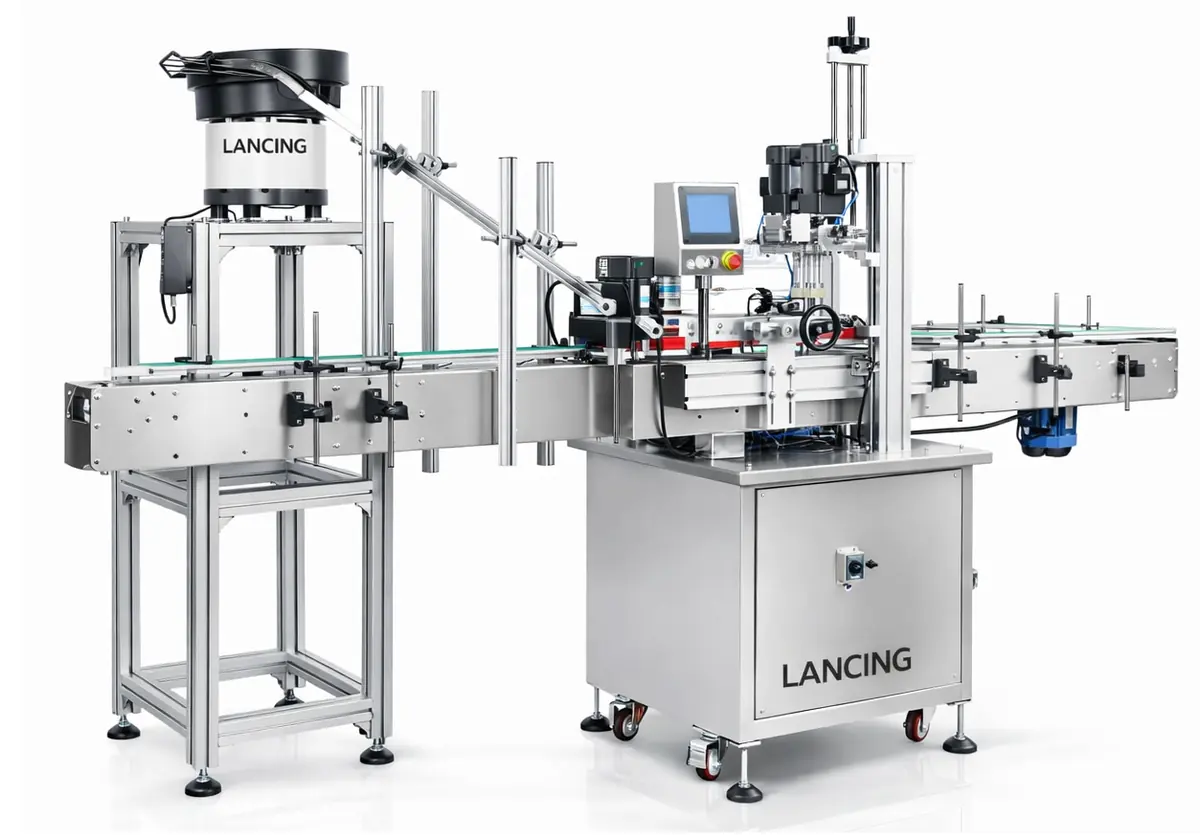
An automatic capper also needs a defined route from bulk loading to orientation, chute delivery, pick-off or placement.

Resist application forces

Containers may need side grip, neck support, top control or format tooling so they remain stable without damage during the cycle.

Evidence for capping configuration

Matched componentsSupply production caps and containers from the intended suppliers.
Closure conditionState the required seating, torque, crimp, tamper-evident or visual result.
PresentationDefine manual placement or the bulk feeder, hopper and refill arrangement.
Container handlingProvide dimensions, filled weight, stiffness and any orientation feature.
Inspection and rejectExplain how missing, high, skewed or incorrectly finished closures are identified and handled.
Buyer questions

Capping questions to resolve before machine selection.

Component variation and handling are frequent sources of risk, so trials should use the real closure and container combination.

Can a capping head compensate for an incompatible cap and neck?

No. The closure and neck finish must be compatible before the machine setting can be optimised.

What is the difference between cap application and cap tightening?

Some systems place a closure first and then tighten or finish it in a separate controlled step; the project must include both functions where required.

When is a cap feeder needed?

A feeder is needed when caps must be supplied automatically. Its design depends on cap geometry, range, required rate and loading method.

How can container scuffing be reduced?

Guide material, belt pressure, support points, cleanliness and speed should be reviewed with the real filled container.

How is capping quality accepted?

Agree the appropriate removal-torque, seating, visual, leak or tamper-evidence checks for the closure.

What information supports a quick changeover?

Record recipes, guide positions, head or chuck parts, feeder settings and approved samples for each format.

Prepare a useful machinery enquiry

Send matched cap and container samples together with the required finish and target production pattern.

Capping machine questions

Questions about closures, containers, torque and feeding.

A closure must be presented, located and applied to the container consistently; the capper cannot compensate for every component variation.

How do I match a capping machine to a closure?

Match the capping machine to the closure application method, geometry, material, handling behaviour and required finished condition. Screw caps, trigger pumps, press-on closures, ROPP closures and crown caps need different processes. The container neck finish, support requirement and available gripping surface must be assessed at the same time.

What affects repeatable closure application?

Repeatable closure application depends on cap orientation, presentation height, container support, head alignment, controlled application force or torque, component quality and stable line speed. Product on the neck or thread, damaged closures and inconsistent bottle height can also affect the result and should be addressed upstream.

Why do bottle and cap tolerances matter?

Bottle and cap tolerances affect alignment, thread engagement, sealing and the force needed to hold the container during application. Variations that are acceptable individually can combine into a difficult condition. Testing should include samples from the intended suppliers and, where possible, components near the practical limits of the approved range.

When is cap feeding required?

Cap feeding is usually required when an automatic capper must receive closures continuously and in a controlled orientation. The feeding method depends on closure shape, tendency to nest or tangle, surface sensitivity, required rate and how the closure is transferred to the pick-off or placement point. Representative loose caps are essential for evaluation.

Continue your packaging automation research

Use the related guidance below to compare the next decision, then send the actual product, pack and production information when you are ready to discuss a suitable machine or integrated line.

CallContact