Packaging line controls integration guide
Packaging line controls integration defines how individual machines exchange states, how conveyors respond to product demand and how operators recover the line safely after stops. The goal is not to replace each machine’s control system, but to make boundaries, responsibilities and expected behaviour unambiguous.
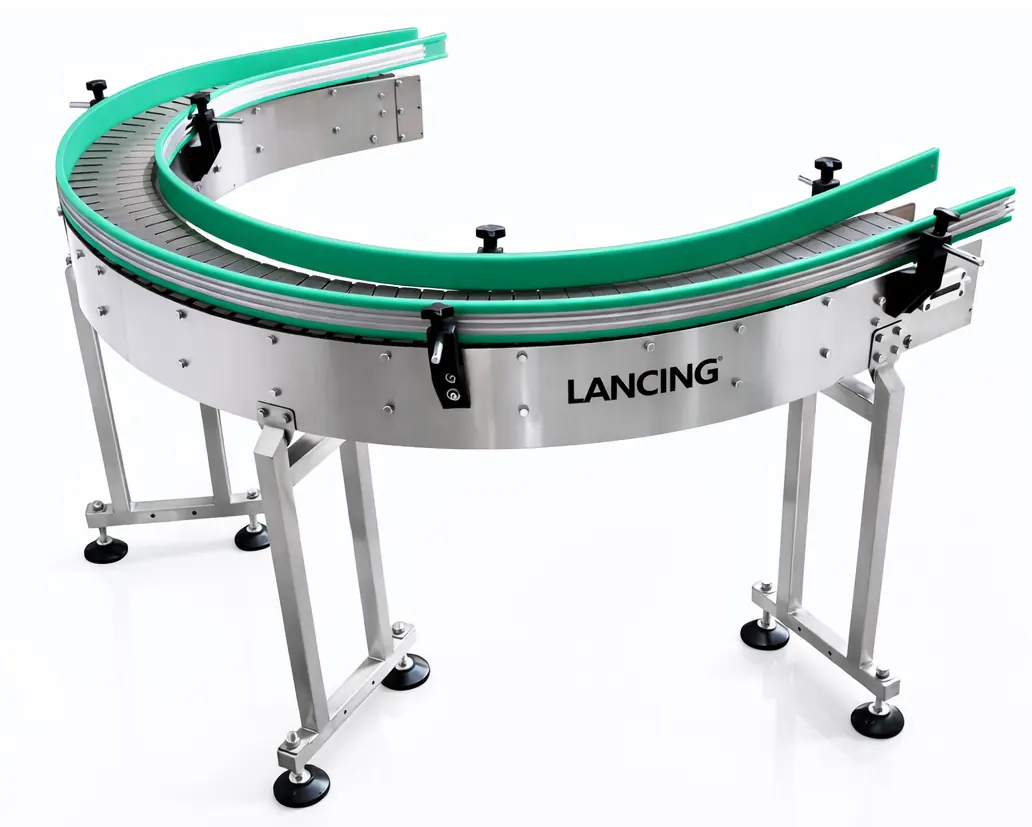
Define the line behaviour before software work begins
A controls interface is strongest when the mechanical process, machine states and safety responsibilities are agreed together rather than handled as separate late-stage tasks.
Name the operating states
Define ready, running, blocked, starved, stopped, faulted, access requested and maintenance states in terms each connected machine can recognise. Avoid relying on supplier-specific labels without an agreed meaning.
Map the product flow
Show where sensors detect demand, how accumulation is used and what each conveyor zone does when upstream or downstream equipment changes state. Include restart and product-clearance behaviour.
Assign interface ownership
Identify who supplies each sensor, cable, network connection, safety interface, software change and test. A signal list without an owner does not create a working integration plan.
Write the expected line sequence in production language
Start with the physical process: where empty packs enter, how they are controlled through each operation, where incomplete packs are rejected and how finished packs leave. Describe normal production, component replenishment, planned pauses and recovery after a stop. This gives controls engineers a shared basis for signals and timing.
Define which machine is allowed to request product, which one governs a conveyor zone and what happens when an upstream process continues to discharge into a blocked downstream area. If accumulation is used, state its purpose and the point at which the line must stop to avoid pressure, unstable packs or mixed status.
- Document the sequence for startup, normal running, planned stop and end-of-batch clearance.
- Include manual operations that can hold or release product.
- State how incomplete or suspect packs are identified and prevented from continuing.
- Record who can reset each fault and from which operator position.
Make every handshake specific enough to test
A basic interface may use hardwired ready, run-permit, blocked and fault contacts. More complex projects may exchange status and recipe data over an industrial network. The selected method depends on the machines, required information, customer standards and support responsibilities; it should not be chosen from terminology alone.
For each signal, define source, destination, normal state, fail-safe expectation where relevant, and the physical or network interface. Recipe or batch information needs ownership rules so that conflicting values cannot be entered independently at several machines. Coding and inspection systems may require product selection, trigger, result and reject-confirmation signals.
- Keep a controlled I/O or data-point list with revision status.
- Identify network addresses, switches, customer IT approvals and remote-access constraints.
- Define what happens when communication is lost.
- Record whether data is operational, quality-related or only for information.
Coordinate operational control with the machinery risk assessment
Production status and safety functions are related but not interchangeable. Emergency stops, guard interlocks, safe isolation, reset and restart behaviour must be designed and validated as part of the applicable machinery safety process. A normal run-permit signal should not be assumed to provide a safety function.
When separate machines form an assembly, boundaries can change because access to one area may expose hazards from another. Identify the responsible parties and obtain competent, project-specific assessment. This guide is general planning information and does not replace a risk assessment, safety-system design or validation.
- Show emergency-stop and guard zones on the layout.
- Define which hazards are removed by each access request or safety function.
- Prevent automatic restart after a safety demand unless the design and assessment explicitly permit it.
- Agree who validates each new or modified safety interface.
Test normal flow and controlled abnormal conditions
Integration testing should include more than a successful production run. Simulate blocked and starved conditions, planned operator access, component shortages, loss of a third-party result and recovery after a machine fault. Observe whether packs remain controlled and whether the operator receives a clear indication of the required action.
Keep software versions and configuration backups with the project record. Changes made during commissioning should be logged, assessed and retested against the functions they affect. Where remote support is used, agree access controls and the customer’s approval route before the line enters production.
- Test each interface individually before relying on complete-line behaviour.
- Record alarm text, machine state and recovery steps for common stops.
- Verify reject commands and physical confirmation where included.
- Retain an approved backup after final site changes.
Controls information to define for every connected machine
The schedule can begin at concept stage and gain detail as suppliers and devices are confirmed.
| Machine boundary | Physical infeed and outfeed point, conveyor ownership and product condition at hand-off. |
|---|---|
| Operating states | Ready, run permitted, running, blocked, starved, stopped, faulted and access requested. |
| Signal method | Hardwired contacts, analogue values, network data, trigger signals or customer system interface. |
| Safety interface | Emergency-stop, guard, safe stop, reset and validation responsibility defined by competent assessment. |
| Recipe control | Source of format or product selection, permitted edits, confirmation and mismatch handling. |
| Coding and inspection | Trigger, product data, result, reject command, reject confirmation and missing-result behaviour. |
| Fault recovery | Operator message, clearance method, reset authority and restart sequence. |
| Ownership and test | Supplier for hardware and software, installation responsibility, witness and acceptance evidence. |
Controls documents to assemble before integration testing
Use current information from each supplier. Old signal lists and unapproved drawings can create faults that appear only when the line is commissioned.
- Line functional description and operating-state definitions.
- Approved layout with conveyor zones, sensors and safety boundaries.
- Machine I/O or network interface documents.
- Recipe, batch, coding and inspection data requirements.
- Customer electrical, controls, cybersecurity and remote-access standards.
- Cause-and-effect list for blocked, starved, fault and access conditions.
- Software revision and backup procedure.
- Interface test schedule and responsible witnesses.
Keep the interface schedule independent of any one software platform
The schedule should describe required behaviour clearly enough that each supplier can implement and test its part, even when the machines use different control hardware.
Packaging line controls integration questions
Does every machine need the same PLC brand?
Not necessarily. Machines can often exchange agreed hardwired or network signals, provided compatibility, support, security and ownership are reviewed for the project.
What is a blocked condition?
It is a defined state in which downstream equipment cannot accept more product. The line response depends on available accumulation, pack stability and the agreed sequence.
Can one machine control the whole line?
A supervisory controller may coordinate a line, but each project should define local machine responsibilities, safe operation, manual modes and behaviour if communication is lost.
Are emergency-stop circuits the same as run interlocks?
No. Safety functions require competent risk assessment, design and validation. Normal operational signals should not be treated as safety functions.
What controls information is needed from an existing machine?
Useful evidence includes drawings, I/O lists, network details, conveyor interface, safety information, software access arrangements and an observation of its current operating sequence.
Related packaging automation guidance
Use these pages to continue from initial requirements through machinery selection, integration and acceptance.
Packaging machinery site readiness
Prepare utilities, retained equipment and third-party support for controls commissioning.
Packaging line bottleneck analysis
Use line-state and downtime evidence to distinguish control delays from process constraints.
Packaging line FAT and SAT guide
Build blocked, starved, restart and interface tests into acceptance planning.
Turn the guidance into a workable machinery brief
Send the information you already have, including samples, drawings, photographs or a process video where available. Lancing can help identify the remaining technical decisions before a quotation or line proposal is prepared.
Extend the controls schedule to recipes, performance and pack identity.
Machine handshakes should be defined with the information used to run, measure and verify the line.
Recipes and formats
Identify the master source, parameter ownership, permissions and recovery behaviour.
States and counts
Use consistent definitions for running, starved, blocked, faulted, good and rejected output.
Coding and traceability
Connect the approved job, printer, inspection, reject response and production record.
Make signal, data and software responsibilities explicit.
A responsibility matrix connects the interface schedule to named suppliers, installers, testers and approvers.
Define controls and data battery limits
Allocate signal definitions, cabling, programming, licences, testing and change approval.
Control changes during ramp-up
Record recipe, PLC and drive changes against affected formats and production evidence.
Train authorised controls users
Separate normal recipe selection from restricted parameter and program changes.