UK packaging automation projects01494 623015sales@lancinguk.com
Labelling machinery buyer guide

Labelling machines UK

Match the labelling machine to the container shape, label position, reel specification and line speed.

Labelling machines UK
Buyer information

What to consider before selecting equipment.

These notes help match the machinery specification to the product, pack format and output required.

Define the pack and product first

Labelling machines UK should be selected around the actual product sample, container dimensions, closure or label specification and how the operator will load or unload the line.

  • Provide filled and empty samples before final machine selection.
  • Confirm whether the machine must run semi-automatically or automatically.
  • Review cleaning, changeover and maintenance access at quotation stage.

Match output to a realistic line layout

The best result normally comes from balancing each process rather than buying one fast machine that is restricted by upstream or downstream handling.

  • Confirm containers per minute or packs per hour.
  • Allow space for infeed, accumulation, rejects and operator access.
  • Check utilities including compressed air, power and extraction where required.

Use the enquiry to reduce risk

A short technical review can identify whether a standard machine is suitable or whether tooling, guarding, conveyors or integration changes are required.

  • Share photos or videos of the current process.
  • State the product range and expected future formats.
  • Ask for any sample testing needed before order.
Related equipment

Continue comparing suitable machinery.

Follow these related pages to narrow the machinery type and prepare an enquiry.

Speak to Packaging Automation UK

Send product and container details and we will suggest the closest machine style, whether a semi-automatic machine, standalone automatic machine or integrated line is the better starting point.

Send an enquiry
What information is needed for labelling machines uk?

The key details are product type, pack dimensions, target output, accuracy or finish requirement, utilities, available space and whether the process is manual, semi-automatic or fully automatic.

Can labelling machines uk be integrated into a line?

In many cases yes. Integration normally depends on conveyor height, pack stability, available control interfaces, guarding requirements and the upstream/downstream machinery.

How quickly can I get advice?

Send product details, pack photos and the required output through the enquiry form and the team can advise on the closest suitable machinery type.

Labelling machine selection

Control the label and the pack at the same point.

Accurate label placement requires a compatible label roll and a repeatable container path through dispensing, wiping or rolling components.

Define the surface and position

Round, tapered, flat, recessed and multi-panel packs need different control and application methods.

Review the full label construction

Facestock, adhesive, backing, die-cut gap, roll direction, curl and print registration influence feeding and final presentation.

Stabilise and orient the pack

Filled weight, pack geometry, guide contact and any registration feature affect how consistently the label can be placed.

Labelling application evidence

Physical label rollsUse production material with the intended core and winding direction.
Pack samplesSupply every approved format in the condition used during labelling.
Placement drawingShow label position, wrap, overlap, panel or orientation tolerance.
Sensing and codingIdentify registration marks, clear labels, date or batch coding and inspection needs.
Line interfaceConfirm pack spacing, conveyor height, upstream orientation and downstream handling.
Buyer questions

Labelling questions to resolve before machine selection.

The label supplier, container supplier and machine settings all contribute to the application result.

Why can a newer label stock behave differently?

Changes in facestock, adhesive, backing, varnish, stiffness or die cutting can alter dispensing and the way the label conforms.

Can clear labels be detected?

They can require a sensing method suited to transparent material and the actual backing web, so a roll should be tested.

How are tapered containers labelled?

The label shape and application path must account for the taper; a rectangular label may wrinkle or climb when wrapped around a conical surface.

Can front and back labels be applied in one pass?

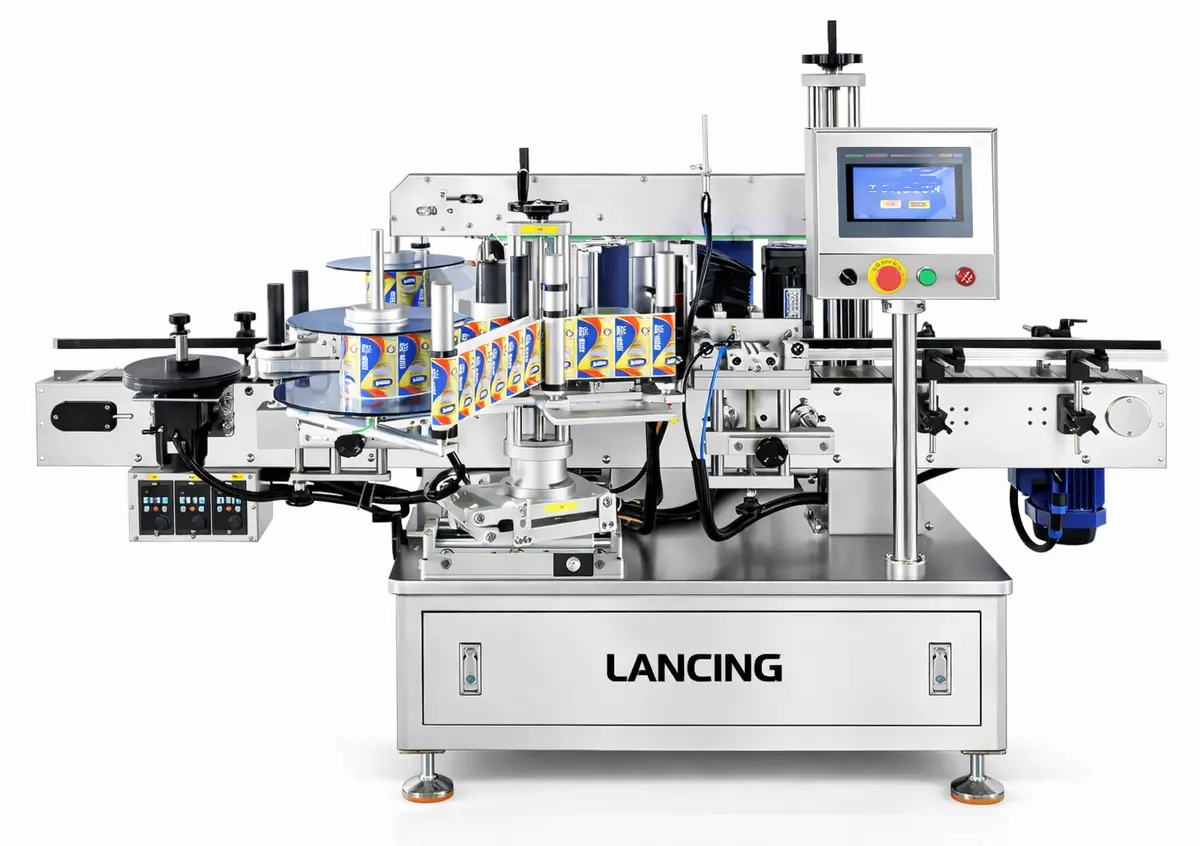
Yes with suitable spacing and pack control, provided both rolls, positions and any orientation requirement are defined.

What causes inconsistent label position?

Variable pack spacing, guide movement, sensor setting, backing tension, label gap or container slip can contribute.

What should be retained after setup?

Approved samples, recipe and sensor values, guide positions, roll direction and operator checks for each format.

Prepare a useful machinery enquiry

Send the physical label roll, pack samples and a marked placement example so the application method can be reviewed.

Labelling machine questions

Questions about labels, containers and placement quality.

Reliable labelling needs a compatible label construction, consistent release from the backing and controlled presentation of the container.

What information determines whether a label can be applied reliably?

Reliable label application depends on label dimensions, shape, material, adhesive, backing paper, gap and winding direction, together with the container surface, geometry, rigidity and presentation. The required label position, tolerance, line speed and environmental conditions should be defined before selecting the applicator and handling method.

Can one labeller handle round, flat and shaped containers?

Some labellers can handle more than one container family with guides, recipes and change parts, but the application method must suit each geometry. Round wraparound, front-and-back and flat-surface labelling control products differently. A wide format range may justify separate tooling or a different machine rather than one compromised setup.

Why do label bubbles, creases or skew occur?

Bubbles, creases and skew can result from container contamination, trapped air, compound curves, label stiffness, unsuitable adhesive, poor web tension, inaccurate product spacing or movement during wipe-down. Trials should use production-intent labels and containers because artwork, varnish and material changes can alter application behaviour.

What samples and drawings are needed for a labelling trial?

Provide finished containers, production-intent label rolls, label and backing specifications, winding direction, required position and any orientation feature. Include the smallest, largest and least stable formats. A dimensioned drawing or marked sample helps distinguish the label target from normal container variation.

Continue your packaging automation research

Use the related guidance below to compare the next decision, then send the actual product, pack and production information when you are ready to discuss a suitable machine or integrated line.

Relevant machinery

Review active machines related to this guide.

Use the machine pages to compare operating principles, then confirm suitability against the actual product, pack and required line interface.

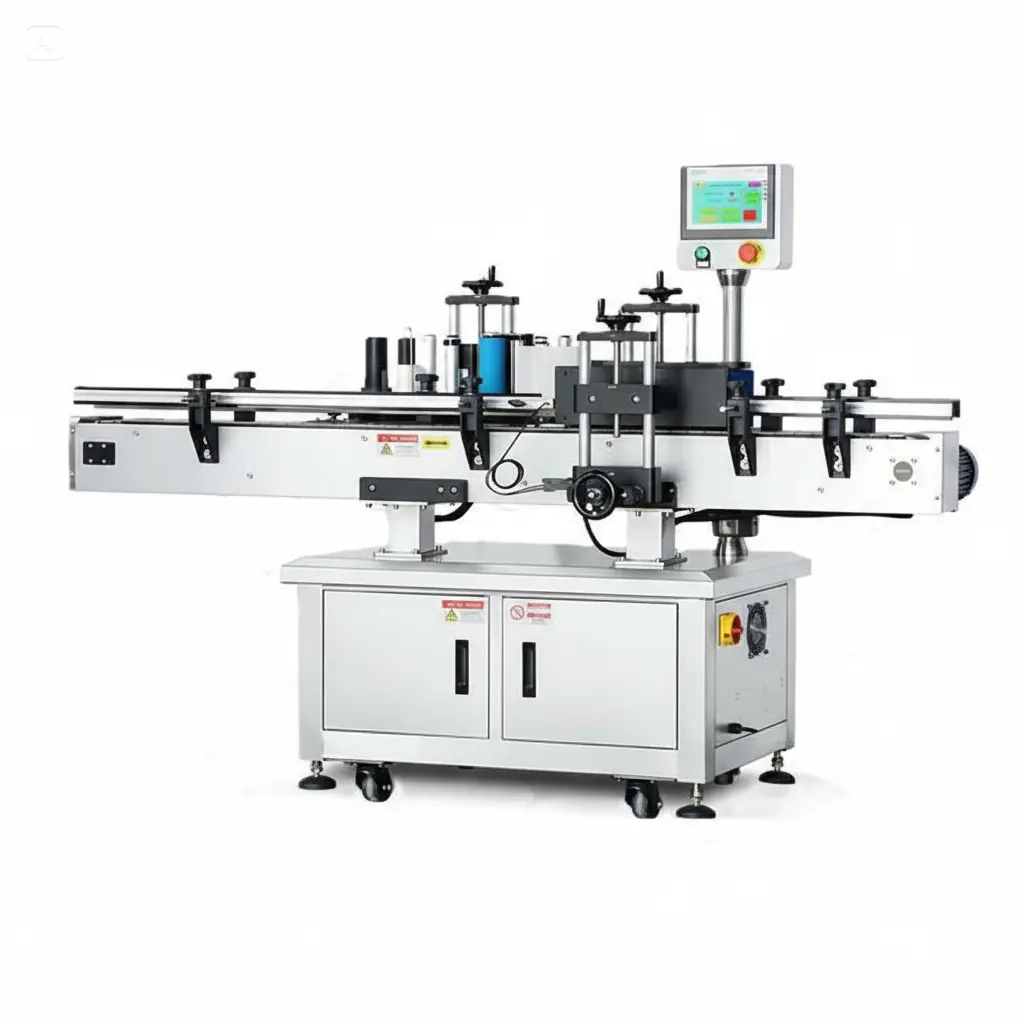
Automatic wraparound bottle labeller

For suitable cylindrical containers where product spacing, rotation and label control are stable.

Automatic flat-surface labelling machine

For suitable flat packs, cartons or components requiring controlled presentation to the applicator.

Automatic double-sided labelling machine

For suitable square, oval or round containers requiring coordinated front/back application.

CallContact