What affects the cost of packaging machinery?
Packaging machinery cost is shaped by the application evidence, automation level, format range, component handling, line interfaces and services included in the project. A useful budget starts with a controlled scope rather than a single machine label or unqualified headline price.
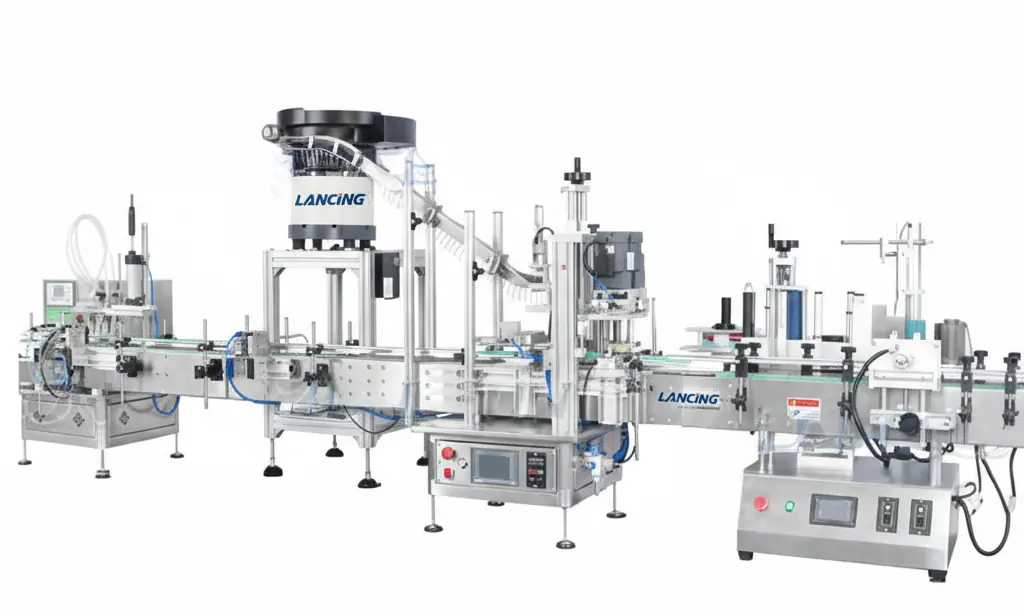
Separate machine price from complete project scope
Two proposals can use similar machine descriptions but include different tooling, feeding, controls, guarding, trials, installation and handover. Compare the delivered production outcome and the responsibilities needed to achieve it.
Application complexity
Product behaviour, pack stability, component variation, cleaning and quality requirements influence the technology, materials and trial work needed to create a dependable process.
Automation and feeding
Automatic presentation of bottles, caps, labels, pouches, cartons or cases can add substantial engineering compared with operator loading. It is justified when the volume and consistency support it.
Integration and services
Conveyors, guarding, controls, coding, inspection, installation, commissioning, training and acceptance testing can be essential parts of the working solution even when they are priced separately.
Product and pack evidence drives the basic equipment route
Filling technology depends on properties such as viscosity, foam, solids, dust, fragility, temperature and required cleaning. Capping depends on closure geometry, neck finish, torque or forming method, component presentation and bottle support. Labelling and sealing depend on pack shape, surface, label or film construction, registration and the required finished appearance.
A standard configuration may be suitable when the application fits a proven operating window. Bespoke tooling, special product-contact parts, containment, wash-down features or unusual handling increase engineering and validation effort. Representative samples reduce uncertainty and make the quotation more specific.
- Provide the complete product and format list rather than one nominal size.
- Identify natural variation in customer-supplied components.
- Separate essential hygiene, containment or material requirements from preferences.
- Use trials where product or component behaviour cannot be confirmed from drawings alone.
Operator loading, automatic feeding and complete lines have different cost structures
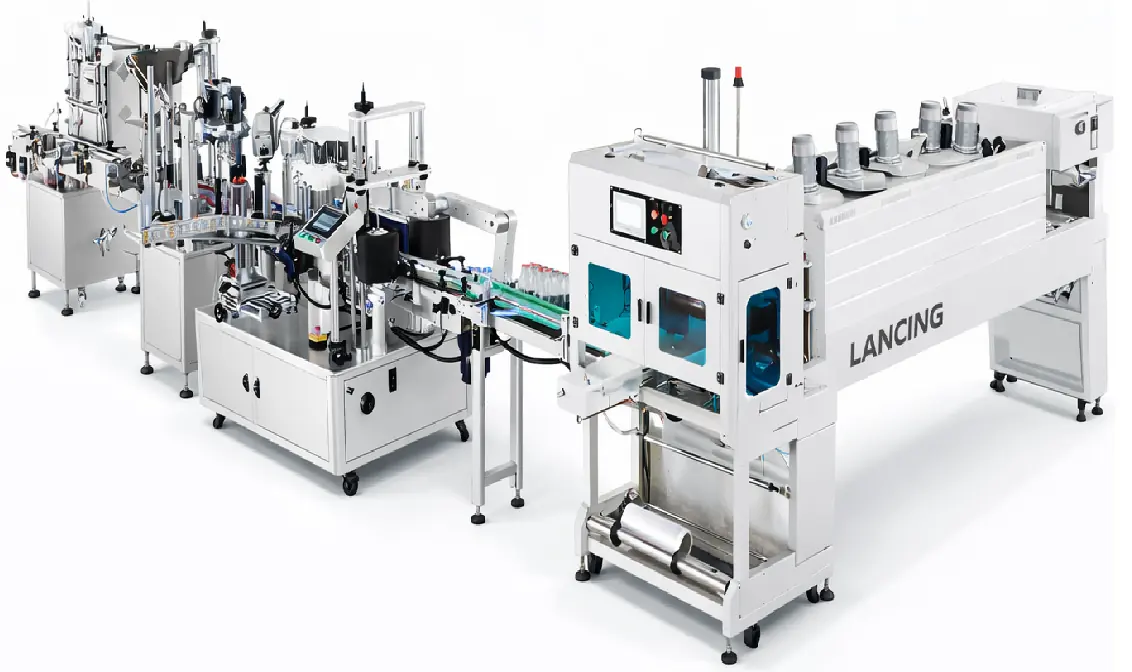
Manual and semi-automatic equipment can be appropriate for short runs, varied formats or early-stage production because the operator performs presentation and transfer tasks. Automatic machines add handling, sensing, controls and guarding so the process can run with less direct intervention. A complete line adds interfaces and balance across several operations.
The right comparison includes labour, campaign size, changeover, replenishment, quality and future demand. Automating one process at a time may control capital exposure, while a coordinated line may reduce duplicated handling and integration work where the production case is already established.
- Define which tasks the operator will still perform.
- Check whether automatic component feeding is included or optional.
- Include accumulation, transfer and collection needed for stable operation.
- Avoid paying for a theoretical rate that upstream supply or downstream packing cannot use.
A wider format range can affect tooling, adjustment and trial scope
Each additional container, closure, label, pouch or case may need guides, stars, belts, nozzles, heads, sensors, recipes or dedicated change parts. Closely related formats may share equipment, while a small-looking dimensional difference can change the handling method. List launch formats separately from possible future work.
Tooling cost is only one consideration. The machine must provide practical adjustment, storage, identification and verification. If frequent changes dominate production, investing in repeatable or simplified changeover may be more valuable than maximising nominal speed.
- Request a format-to-tooling schedule in the proposal.
- Identify which adjustments are manual and which are recipe controlled.
- Confirm storage and handling for removed parts.
- Trial the most difficult or commercially important formats first.
Installation, testing and handover determine the complete delivered cost
Freight, unloading, positioning, site connections, conveyors, third-party interfaces and building work may sit outside the machinery price. Commissioning requires representative materials and a ready site. Training, documentation, spare parts and production support should be compared against the site’s needs rather than assumed from a general phrase.
Factory and site acceptance effort grows with the number of formats, interfaces and quality checks. This is productive work when it reduces uncertainty before production. Keep optional support and future upgrades visible so that the initial project is neither under-scoped nor burdened with unproven extras.
- Use a responsibility schedule for delivery, installation and utilities.
- Define the included factory and site test scope.
- Compare documentation, backups, training and spare-parts provision.
- Record exclusions and unresolved technical assumptions before order.
Cost drivers to define before comparing machinery quotations
The table explains why a useful budget needs technical scope. It does not provide prices, which must be based on the actual application.
| Product handling | Behaviour, contact materials, cleaning, containment and process-control requirements. |
|---|---|
| Pack and component range | Dimensions, variation, stability, orientation and the number of formats included. |
| Automation level | Operator loading, semi-automatic cycle, automatic feeding or integrated line operation. |
| Tooling and changeover | Nozzles, guides, heads, sensors, recipes, format parts and storage. |
| Line integration | Conveyors, accumulation, controls, safety boundaries, coding, inspection and retained equipment. |
| Site scope | Freight, unloading, installation, utilities, extraction, drainage, network and building work. |
| Testing and validation | Samples, trials, factory acceptance, site acceptance and customer quality evidence. |
| Handover and support | Training, documentation, backups, recommended spares, service and future options. |
Information needed for a meaningful machinery budget
An early budget can be useful when the assumptions are explicit. Provide enough evidence to avoid a figure that represents the wrong automation route.
- Product type, behaviour and cleaning requirements.
- Representative pack components and dimensioned format list.
- Current output, target output, batch pattern and shifts.
- Operator tasks to retain or remove.
- Existing machines and required interfaces.
- Available footprint, utilities and installation constraints.
- Trial, acceptance, training and documentation expectations.
- Essential scope, optional scope and likely future formats.
Use budget ranges for decision gates, not false precision
Where samples, layouts or interfaces remain open, the budget should identify those assumptions. A developed quotation can follow once the evidence is sufficient to define configuration and responsibility.
Packaging machinery cost questions
Why is there no single price for a filling or capping machine?
The equipment route can change with product behaviour, pack format, automation, tooling, feeding, controls and services. A price without application evidence may describe a different solution.
Does higher speed always cost more?
Capacity can influence configuration, but handling difficulty, cleaning, format range and integration may be more important. Specify the sustained production need and operating conditions.
Are conveyors normally included?
That depends on the proposal. Confirm the exact infeed, transfer, accumulation and outfeed scope and the interfaces to retained equipment.
Should spare parts be included in the first order?
Review recommended spares against wear, failure consequence, lead time and site capability. Keep the decision visible rather than assuming all spares are included.
How can quotation changes be reduced?
Provide representative samples, a controlled format list, site information and an interface schedule early. Close assumptions before final scope and acceptance are agreed.
Related packaging automation guidance
Use these pages to continue from initial requirements through machinery selection, integration and acceptance.
Packaging machinery quotation checklist
Compare proposals line by line across scope, options, exclusions and services.
Packaging automation project brief
Give suppliers a common evidence base for configuration and budget development.
Packaging line sample trials
Use trials to reduce application uncertainty before final quotation.
Turn the guidance into a workable machinery brief
Send the information you already have, including samples, drawings, photographs or a process video where available. Lancing can help identify the remaining technical decisions before a quotation or line proposal is prepared.
Build the automation business case from measured production evidence.
Cost comparison is more useful when it begins with the current process and separates equipment scope from the assumptions used to value labour, capacity, quality, waste and risk. Use conservative ranges and record which benefits depend on upstream supply, downstream capacity, staffing or later process changes.