How to write a packaging automation project brief
A useful project brief explains the production problem, the pack journey and the conditions under which the equipment must operate. It gives machinery suppliers enough evidence to compare suitable approaches without fixing the solution before samples, interfaces and risks have been reviewed.
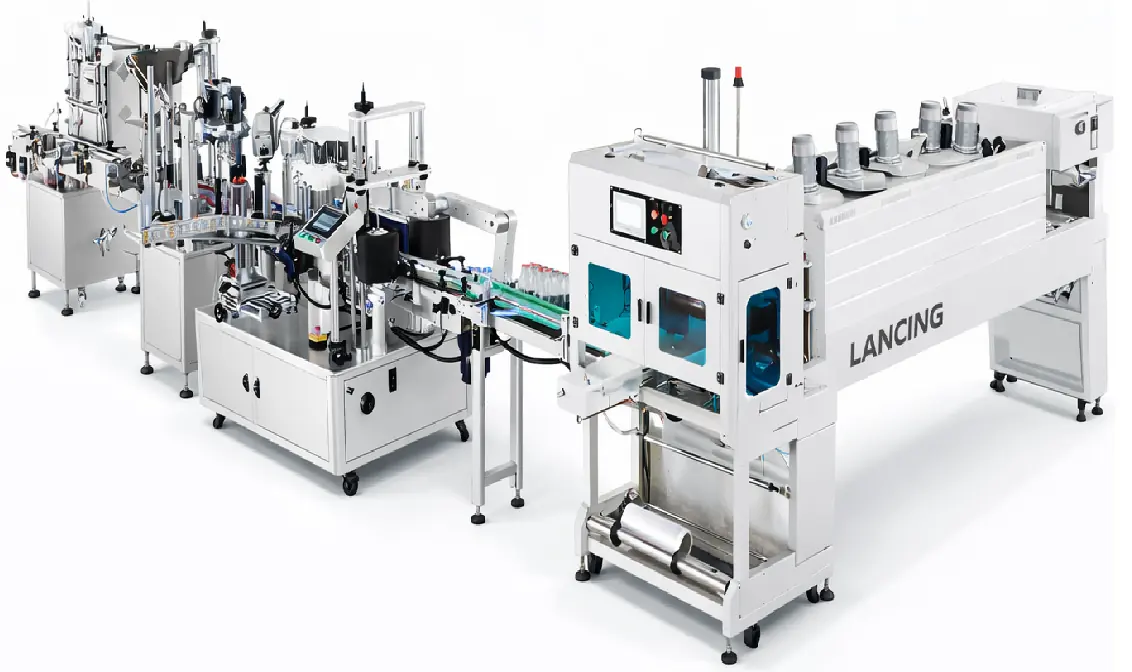
Define the requirement before comparing machines
The strongest briefs separate the required outcome from assumptions about a particular machine. This keeps the review focused on the product, pack, process and site.
Describe the current process
Record how materials arrive, how operators handle them, where quality checks occur and which step limits production. A short process video can reveal transfer and handling details that are difficult to capture in a list.
State the required outcome
Explain what must improve: repeatability, operator workload, containment, presentation, traceability, changeover, capacity or integration. Keep desirable options separate from essential acceptance requirements.
Define project boundaries
Identify what is in scope, what remains manual, which existing machines must be retained and who is responsible for utilities, building work, data connections, guarding interfaces and production materials.
Describe what the machinery must handle, not only what it is called
Product behaviour can influence filling, feeding, sealing, cleaning and material compatibility. Record whether the product is free-flowing, viscous, foamy, dusty, fragile, abrasive, temperature-sensitive or prone to settling. Where relevant, provide a current safety data sheet and explain any cleaning or cross-contamination constraints.
The pack description should include dimensioned drawings or representative samples of the container, closure, label, film, pouch, carton or case. Identify natural variation in components rather than supplying only an ideal sample. For bottles and jars, include neck finish, cap construction and any liner, tube, plug or tamper-evident feature.
- List every format expected at launch and distinguish future formats from the initial scope.
- Show the orientation and presentation required at infeed and the condition required at discharge.
- State whether packaging components are supplied loose, nested, on reels, in trays or already oriented.
- Explain any product-contact, wash-down, dust-control or allergen-management requirement that needs specialist review.
Use a realistic production profile instead of one headline speed
A target rate is useful only when the operating conditions are clear. Include batch size, shift pattern, refill frequency, format mix, product change frequency and the amount of manual intervention that is acceptable. Distinguish instantaneous machine rate from the sustained output needed across a representative production period.
Where an existing process is being automated, record current output and the causes of lost time. These may include component replenishment, product aeration, label-roll changes, cap jams, cleaning, inspection or downstream collection. The new line should be assessed against the complete operating pattern, not one isolated cycle.
- State the minimum acceptable output and any longer-term capacity objective separately.
- Identify the slowest upstream or downstream process that will remain after the project.
- Describe planned staffing and which tasks operators will still perform.
- Explain how rejected, stopped or incomplete packs should be handled.
Record interfaces early enough to influence the equipment layout
Provide a dimensioned site sketch showing doors, columns, floor levels, drains, extraction, service routes and restricted access. Include the direction of product flow, operator positions, cleaning access and the route for installation. The machinery footprint must allow doors, panels, change parts and maintenance items to be opened or removed.
For retained equipment, record conveyor height and width, line direction, control signals, emergency-stop boundaries, product hand-off and available accumulation. Integration should also cover coding, inspection, reject handling, batch data and any requirement to exchange status information with another system.
- Confirm available electrical, pneumatic, water, drainage and extraction services without assuming they suit the final design.
- Identify which organisation is responsible for each mechanical, electrical, controls and safety interface.
- Provide photographs of the installation area and the route from unloading point to final position.
- State shutdown windows and any restrictions on installation, testing or production access.
Translate the project outcome into observable acceptance evidence
Acceptance criteria should define the materials, formats, operating period and quality checks used to demonstrate the agreed functions. Avoid a single pass-or-fail statement based only on nominal speed. Include pack quality, changeover, controlled stops, restart, fault recovery and the allowed level of operator intervention where these are important to the project.
Factory and site testing should use representative production materials wherever practical. Any substitutions, exclusions or open actions need to be recorded so that responsibilities remain clear through delivery, commissioning and handover.
- Name the products and packaging formats included in the agreed test scope.
- Define who supplies materials and how much is required for trials and acceptance.
- Record the checks used to judge fill, closure, label, seal, code or pack presentation.
- Agree how observations, defects and follow-up actions will be documented and closed.
Packaging automation project brief checklist
A concise brief can still be complete when each section answers a clear technical question.
| Business objective | The production problem, required outcome and reason the project is being considered now. |
|---|---|
| Product evidence | Product behaviour, handling risks, cleaning needs and representative samples or data. |
| Pack formats | Container, closure, label, film or case dimensions, variation and presentation at each interface. |
| Production profile | Batch sizes, shifts, format mix, target output, staffing and planned future demand. |
| Site and utilities | Layout, access route, services, environment, restrictions and retained equipment. |
| Controls and data | Line states, handshakes, coding, inspection, reject handling and required data exchange. |
| Testing and handover | Trial materials, acceptance checks, training expectations, documentation and open-action control. |
Files and samples that make the first review more productive
Send what is already available rather than delaying the enquiry for a perfect document. Gaps can then be identified and resolved in a controlled order.
- Representative empty and filled packs, closures, labels, film or cases.
- Product description, safety data where applicable, and notes on viscosity, foam, dust or fragility.
- Dimensioned drawings or measured format ranges.
- Photographs and a short video of the current process and proposed installation area.
- Current output, target output, batch pattern and operator involvement.
- Site sketch with product flow, doors, services and retained equipment.
- List of coding, inspection, traceability or data requirements.
- Initial acceptance priorities and any fixed project constraints.
Use the brief as a controlled decision record
A project brief should be updated when samples, trials or interface reviews change an assumption. Keeping one agreed version reduces contradictory instructions and makes quotation comparisons more meaningful.
Packaging automation project brief questions
Do I need a finished specification before asking for advice?
No. An early brief should explain the problem and provide the evidence already available. Lancing can help identify the technical questions that must be answered before final selection.
Should I specify a particular machine type?
Only where the process route is already proven and fixed. Otherwise, describe the required outcome and constraints so alternative technologies can be compared against the same evidence.
How many samples are needed?
The quantity depends on the process, component variation and planned trials. Provide representative samples first, then agree the trial quantity once the test scope is defined.
Can an existing machine be included in the project?
Potentially, provided its mechanical, controls, guarding, product-transfer and performance interfaces can be confirmed. Photographs, drawings and operating information help the review.
What should be treated as an acceptance criterion?
Use observable requirements that relate to the agreed scope, materials and operating conditions. The exact criteria should be agreed for the project rather than copied from another line.
Related packaging automation guidance
Use these pages to continue from initial requirements through machinery selection, integration and acceptance.
Packaging machinery quotation checklist
Compare proposals against the same scope, interfaces, exclusions and acceptance evidence.
Packaging machinery site-readiness guide
Prepare layout, access, utilities and installation responsibilities before delivery.
Packaging line FAT and SAT guide
Plan representative factory and site acceptance evidence without relying on headline speed alone.
Turn the guidance into a workable machinery brief
Send the information you already have, including samples, drawings, photographs or a process video where available. Lancing can help identify the remaining technical decisions before a quotation or line proposal is prepared.
Use the project brief to decide what must be investigated next.
A feasibility study resolves uncertain application variables, while a responsibility matrix turns the chosen boundary into named tasks.
Packaging automation feasibility study
Investigate the current process, product and pack trials, site constraints and credible concepts.
Packaging line responsibility matrix
Allocate design information, supply, installation, testing and handover responsibilities.
Operator training and handover
Identify the roles, formats and evidence needed for production readiness.