Packaging automation for contract packers
Contract packing equipment must handle more than one stable product and format. The specification should reflect campaign size, customer-owned materials, changeover frequency, approval routes and the commercial consequence of accepting a job that the line cannot run reliably.
Build flexibility around real campaign demand
The best automation route is not always the highest-capacity line. Contract packers often gain more from controlled changeover, clear format limits and equipment that can be deployed across several compatible jobs.
Group compatible work
Segment enquiries by product behaviour, pack geometry, closure, label or film and required quality checks. Automation is easier to justify when several jobs share a stable process platform.
Control new-job approval
Use samples and a technical intake form before promising capacity. Record which formats are proven, which need tooling and which require a trial or different technology.
Protect changeover capacity
Include tooling, recipes, cleaning, component loading, first-off approval and customer-specific records in the production plan. Short runs can be dominated by non-running work.
Screen each enquiry against the proven operating window
A contract packer may receive incomplete product and pack information from a brand owner. Use a controlled intake process to capture product behaviour, safety information, container and closure dimensions, label or film specifications, batch size, required date, coding, inspection, quality and traceability expectations. Do not reserve production capacity on the assumption that a nominally similar pack will run.
Maintain a format and tooling register showing proven combinations, conditional combinations and unsupported work. A new bottle may fit the guides but require a different cap feed, fill nozzle, label sensor or reject method. Representative samples and a defined trial can close these questions before commercial commitments are made.
- Request product and component samples early enough for testing and tooling decisions.
- Record the customer-approved artwork, code content and version.
- Identify whether materials are customer supplied and who controls incoming quality.
- State the conditions that make a job subject to a trial or engineering review.
Choose a platform that matches the format family and campaign pattern
Semi-automatic equipment can provide practical flexibility for low-volume or highly variable jobs because the operator performs presentation and inspection tasks that would otherwise need dedicated automatic handling. Automatic equipment becomes more attractive when several campaigns share consistent packs, production demand and component presentation.
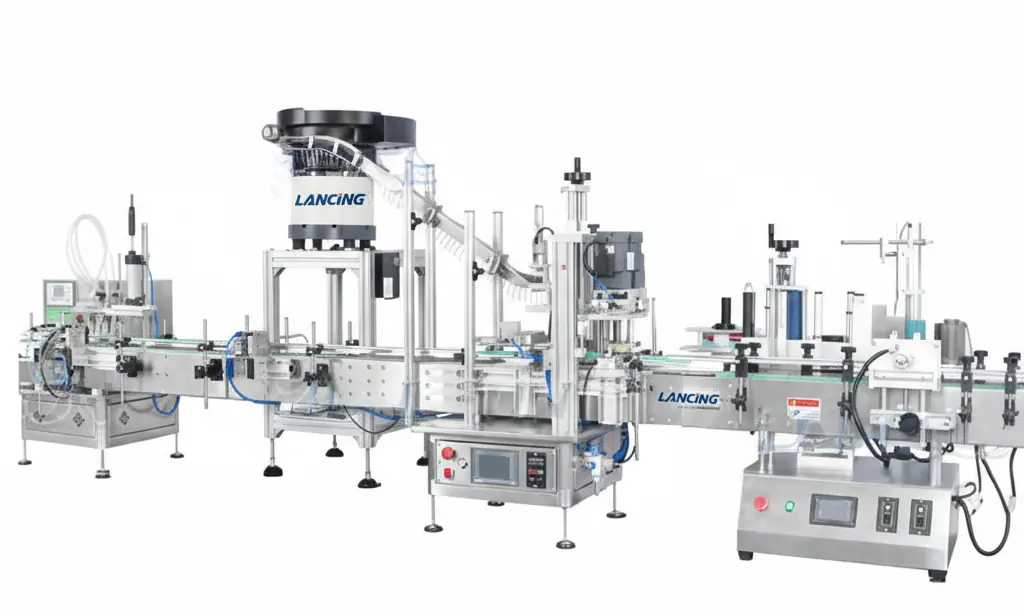
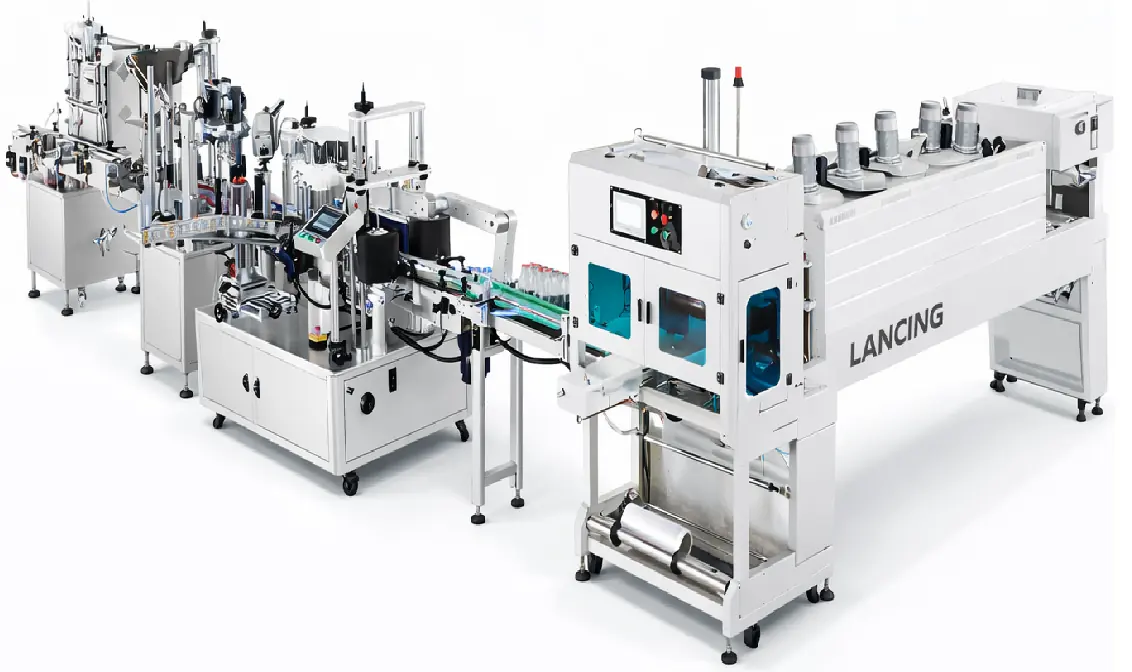
A modular line can combine infeed, filling, capping, labelling, coding and collection while allowing selected processes to be bypassed or changed. The design should avoid claiming universal flexibility: every machine has physical and process limits that need to be defined using real formats.
- Separate the proven format range from a theoretical adjustment range.
- Consider cleaning and cross-contamination controls when products change.
- Check whether automatic feeding is justified for the closure and batch size.
- Allow for manual inspection or packing where customer requirements vary frequently.
Control materials, recipes and customer-specific records
Multi-customer work increases the importance of line clearance, component identification and recipe control. Define how the previous job is cleared, how the correct product and packaging version are verified and how unused or rejected materials are segregated. The appropriate record system depends on the customer, product and site quality procedures.
Coding and label data should have an approved source and controlled transfer to the production equipment. Avoid retyping the same information independently at several machines where a managed process can reduce mismatch risk. Any data integration needs clear responsibility, validation and change control.
- Use a job pack or traveller that identifies current materials, tooling, recipe and checks.
- Confirm line-clearance and first-off approval responsibilities.
- Record rework and reject disposition for customer-owned materials.
- Keep equipment configuration and software changes under controlled authority.
Include setup, approval and non-running time in the commercial model
A job that appears profitable at nominal machine speed can lose capacity through tooling setup, cleaning, customer approval, component replenishment, manual handling or repeated quality intervention. Estimate the complete campaign cycle using evidence from comparable work or a representative trial.
When considering new automation, map the volume already available across compatible customers rather than depending on one uncertain forecast. A phased approach may begin with a flexible standalone process and later add automatic feeding, transfer or end-of-line equipment when the job family is proven.
- Record minimum practical batch size for each equipment route using site evidence.
- Distinguish setup labour, running labour and customer-specific inspection.
- Identify tooling and trial costs before confirming the production price.
- Recheck capacity when a new job changes the format mix or cleaning sequence.
Contract packing information to confirm before committing capacity
A consistent intake process protects the customer, production team and machinery investment.
| Product | Behaviour, safety information, temperature, settling, foam, dust, fragility and cleaning implications. |
|---|---|
| Primary pack | Container, pouch or sachet dimensions, material, variation, orientation and supplied condition. |
| Closure and label | Cap or seal construction, feed presentation, label or film specification, artwork and code area. |
| Campaign | Batch size, run frequency, forecast confidence, due date and future formats. |
| Quality | Fill, closure, label, seal, code, inspection, sampling and release requirements. |
| Materials ownership | Who purchases, approves, stores, counts and disposes of product and packaging components. |
| Changeover | Tooling, cleaning, line clearance, recipe, first-off approval and customer sign-off. |
| Technical status | Proven, conditionally suitable, trial required, tooling required or outside current capability. |
Prepare a machinery brief for a contract packing operation
Use actual job families and demand patterns so the equipment is not over-specified for one enquiry or under-specified for the recurring workload.
- List of current and likely products grouped by handling behaviour.
- Representative containers, closures, labels, film, pouches or cases.
- Campaign sizes, frequencies and seasonal peaks.
- Current setup, cleaning, labour and quality-inspection activity.
- Customer traceability, coding and approval requirements.
- Known format problems and rejected enquiries.
- Available footprint, utilities and movement of materials through the site.
- Priority jobs for sample trials and equipment acceptance.
Plan a proven core with controlled exceptions
A flexible operation still needs limits. Define the core formats the line is designed to run, then use a technical approval process for every new product or pack outside that evidence.
Contract packing automation questions
Is semi-automatic machinery better for short runs?
It can be when format variety and manual presentation make full automatic handling difficult to justify. Compare the complete campaign cycle, labour and quality needs for the actual job family.
Can one line handle every customer bottle?
No useful line should be described that way. Define dimensional, component and process limits, then trial materially different formats before accepting them.
How should new customer packs be approved?
Use a technical intake, representative samples and a defined trial when suitability is not already proven. Record tooling, recipe, cleaning and quality requirements before commercial confirmation.
What automation should be added first?
Start with the constraint that is common across enough compatible work, such as filling, capping, labelling, sealing or transfer. Avoid automating a variable that changes for every job unless the handling solution is proven.
How can customer-specific coding errors be reduced?
Use controlled job data, approved artwork and a clear verification process. Data integration may help, but it must be designed and validated for the site’s systems and responsibilities.
Related packaging automation guidance
Use these pages to continue from initial requirements through machinery selection, integration and acceptance.
Packaging line sample trials
Prove new job families, component variation and tooling requirements before production commitment.
Changeover, cleaning and maintenance guide
Assess the non-running work that controls short and varied campaigns.
Packaging machinery cost factors
Build a machinery case around format demand, automation level and integration scope.
Turn the guidance into a workable machinery brief
Send the information you already have, including samples, drawings, photographs or a process video where available. Lancing can help identify the remaining technical decisions before a quotation or line proposal is prepared.