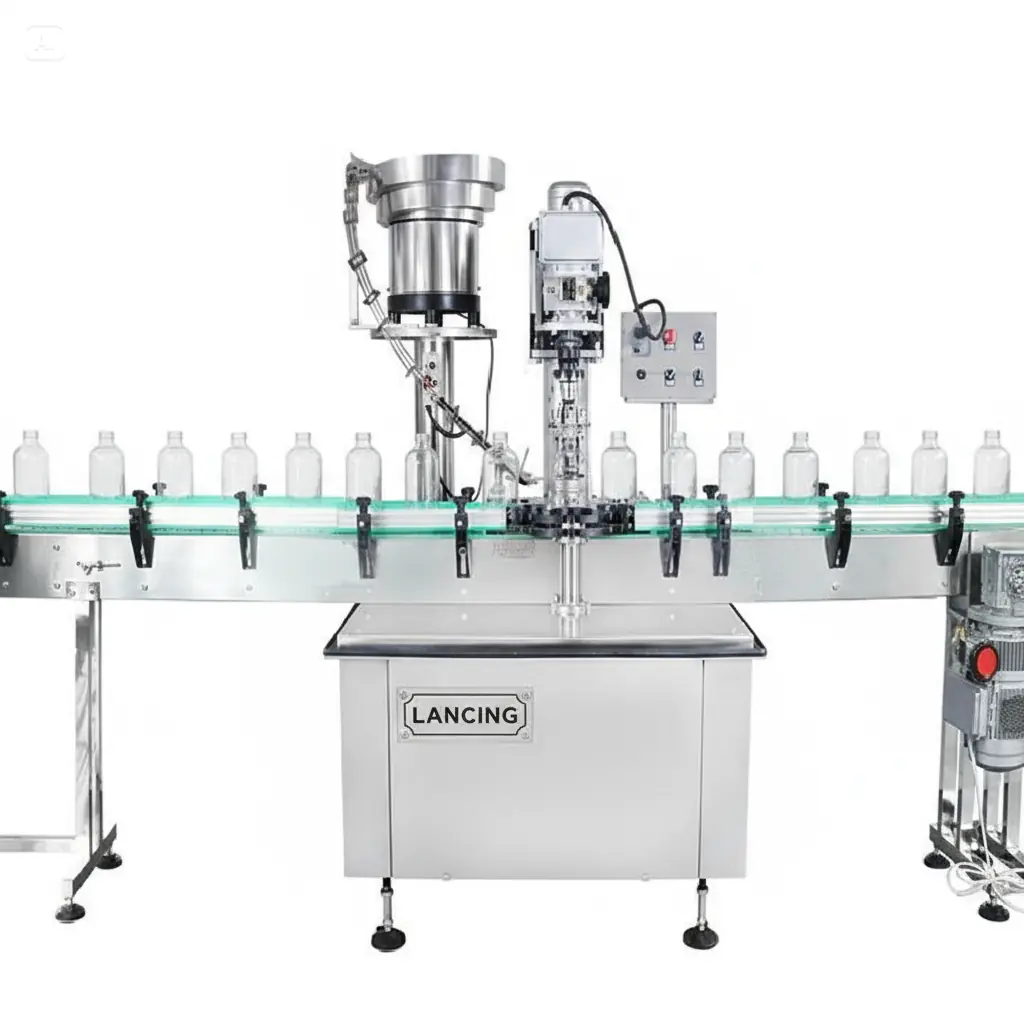
Semi Automatic Ropp Capping Machine
TECHNICAL SPECIFICATIONS Model: LU-XG60C
Machine overview
Use this page as a starting point for matching the machine family to your container, closure, label, pack format, target speed and available production space.
- Review suitability against your product and pack samples.
- Confirm speed, utilities, tooling and integration requirements.
- Ask for options, pricing guidance and lead time.
Reference specification
| Power | 250W |
|---|---|
| Voltage | 110/220V 50–60Hz |
| Machine Size | About 420×600×1400mm (L×W×H) |
| Machine Capacity | 25–30 bottles/min |
| Suitable Bottle Height | 60–350mm |
| Suitable Bottle Caps' Diameter | 20–50mm |
| Net Weight | 80kg |
What is Semi Automatic Ropp Capping Machine used for?
TECHNICAL SPECIFICATIONS Model: LU-XG60C
What output can Semi Automatic Ropp Capping Machine achieve?
Final throughput depends on the product, container, fill volume and level of automation selected for the project.
What utilities or site requirements should I plan for?
Voltage: 110/220V 50–60Hz; Power: 250W; Footprint / size: About 420×600×1400mm (L×W×H)
Can Lancing UK help match this machine to my product and container?
Yes. Lancing UK can review your product characteristics, bottle or pack format, closure type, required output and site constraints to confirm the right configuration before supply.
Request a configuration check
Send product details, container dimensions, closure or label samples, target output and any available line photos. The team can confirm whether this machine is the right starting point.
Send enquiryRelated machinery guidance
Use the relevant guide to check application variables before a final machine configuration is confirmed.
Confirm the bottle and ROPP closure as a matched set
For this semi-automatic ROPP route, supply the actual bottle finish and aluminium closure rather than dimensions alone. Include the closure drawing or supplier reference and the approved finished pack if one exists. Ask which head and tooling configuration is proposed for that combination.
Describe how the operator presents and removes bottles during the working cycle. Keep that task in the output assessment instead of relying only on the listed machine capacity. A useful trial records the accepted closure result and the operating arrangement that produced it.
- Pack acceptance
- Agree which checks will assess closure formation, opening behaviour and seal performance for the intended product. Retain the acceptance method with the trial results.
- Format changes
- List every required bottle and cap combination and ask which change parts or adjustments are needed for each.
Does a listed cap-diameter range establish tooling compatibility?
It does not replace a review of the actual closure and bottle finish. Confirm the proposed tooling and demonstrate the matched pack before release.