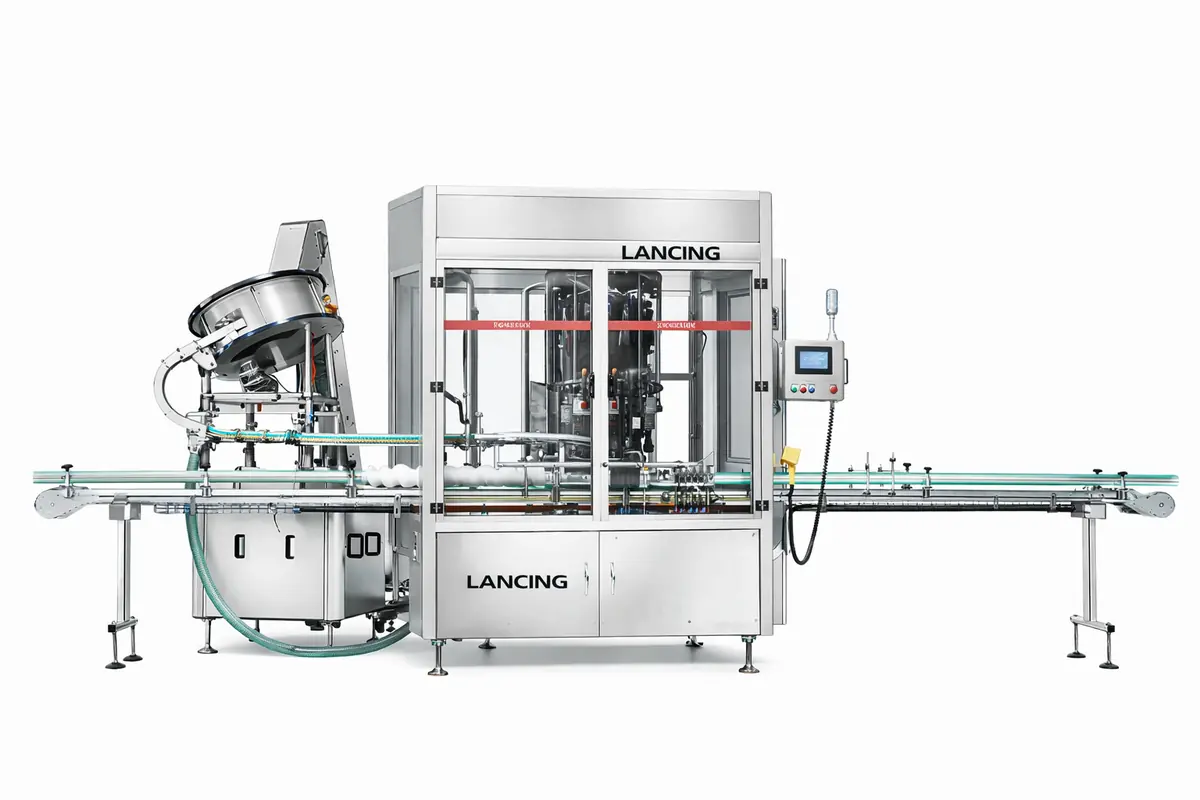
Automatic High-Speed Capping Machine
The Lancing UK LU-FXZ101 is a high-speed automatic capping machine engineered for efficient bottle sealing in industrial production lines. Equipped with...
Machine overview
Use this page as a starting point for matching the machine family to your container, closure, label, pack format, target speed and available production space.
- Review suitability against your product and pack samples.
- Confirm speed, utilities, tooling and integration requirements.
- Ask for options, pricing guidance and lead time.
Reference specification
| Closure and container evidence | Provide representative containers and closures, including dimensional variation, cap presentation and the required closing result. |
|---|---|
| Handling and changeover | Confirm how containers are stabilised, how closures are fed or presented and which formats require tooling or recipe changes. |
| Utilities and installation | Electrical, pneumatic, footprint, guarding and access requirements depend on the selected cap handling and closing configuration. |
| Final verification | Lancing should confirm the complete specification against the approved closure, container and site information before order. |
What is Automatic High-Speed Capping Machine used for?
The Lancing UK LU-FXZ101 is a high-speed automatic capping machine engineered for efficient bottle sealing in industrial production lines. Equipped with six rotary rubber wheels, it delivers precise and secure cap tightening for various bottle types.
What output can Automatic High-Speed Capping Machine achieve?
Final throughput depends on the product, container, fill volume and level of automation selected for the project.
What utilities or site requirements should I plan for?
Electrical, pneumatic, footprint, guarding and access requirements depend on the selected cap handling and closing configuration.
Can Lancing UK help match this machine to my product and container?
Yes. Lancing UK can review your product characteristics, bottle or pack format, closure type, required output and site constraints to confirm the right configuration before supply.
Request a configuration check
Send product details, container dimensions, closure or label samples, target output and any available line photos. The team can confirm whether this machine is the right starting point.
Send enquiryautomatic cap feeding and capping application.
The capping unit, cap feeder and container-handling system should be reviewed as one process using matched production components.
Confirm cap orientation features
A feeder must distinguish the correct orientation without damaging, nesting or jamming the closure across the approved cap range.
Control placement before tightening
The delivery chute or pick-off should present each cap squarely and at the correct timing before torque or finishing is applied.
Support the filled container
Side grip, neck support and guides must resist capping forces while protecting the pack surface and maintaining line flow.
Configuration evidence
| Caps | Production caps, including difficult colours, finishes or supplier variants. |
|---|---|
| Containers | Matched filled containers with neck finish, stiffness and weight. |
| Finish standard | Required seating, torque, visual or tamper-evident condition. |
| Bulk loading | Hopper capacity expectation, operator loading height and refill pattern. |
| Interfaces | Upstream spacing, downstream inspection, reject handling and starve/block signals. |
Questions to resolve for this automatic cap feeding and capping application.
The existing reference specification is a starting point; final suitability should be checked against representative product and packaging samples.
Why must the feeder be trialled with production caps?
Geometry, surface finish, flexibility and static behaviour affect orientation and delivery.
Can one feeder handle pumps and screw caps?
Different component families often need different orientation and delivery arrangements; compatibility should not be assumed.
How is cap placement checked?
The line may use presence, height, vision or another appropriate inspection before or after tightening.
What causes cross-threading or skewed caps?
Component mismatch, poor presentation, container movement, timing and head alignment can contribute.
What should be included in a connected run?
Observe bulk loading, feed continuity, placement, tightening, stops, recovery, inspection and reject behaviour with the approved pack.
Prepare a useful machinery enquiry
Send the samples and production information listed above so this machine can be checked against the complete application rather than the title alone.
Related machinery guidance
Use the relevant guide to check application variables before a final machine configuration is confirmed.