UK packaging automation projects01494 623015sales@lancinguk.com
Automation level comparison

Manual, semi-automatic or automatic packaging machinery?

Choose the automation level by the work that must be controlled, the required production pattern and the surrounding process—not by headcount or headline speed alone.

Manual, semi-automatic or automatic packaging machinery?
Direct answer

Manual, semi-automatic or automatic packaging machinery?

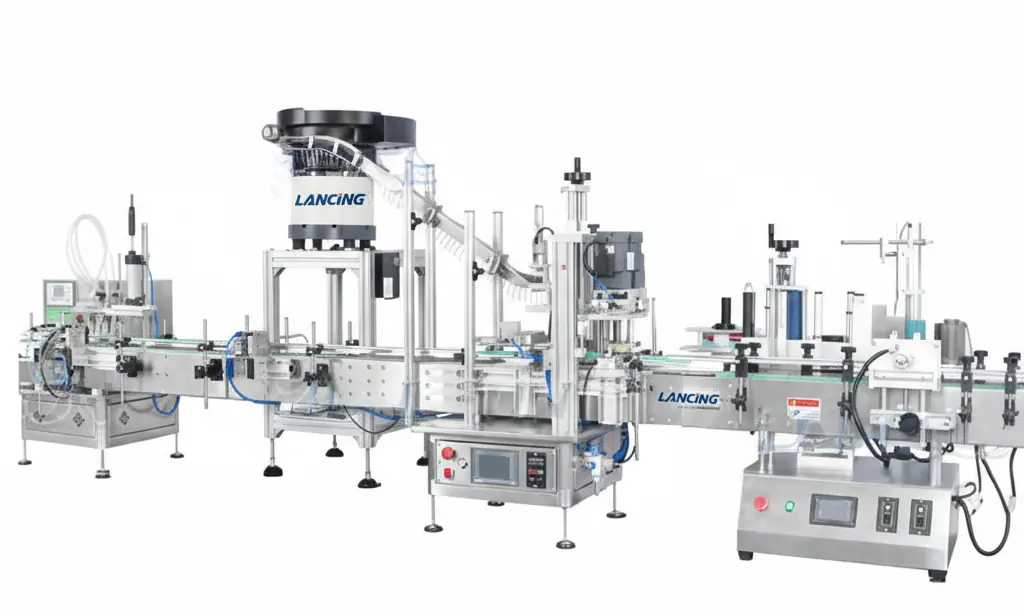
Manual packaging relies on the operator to perform and control most of the cycle. Semi-automatic machinery controls the main process while the operator loads, starts or unloads it. Automatic machinery receives and discharges packs through a controlled sequence. The correct choice depends on repeatability, sustained demand, pack range, operator interaction, line interfaces and the ability to support changeover and maintenance.

Use this guide to prepare a decision

  • Define the product and packaging components that will actually run.
  • State the required production result and how it will be verified.
  • Include changeover, cleaning, supply, discharge and line-control conditions.
  • Confirm suitability with representative samples before final selection.
Selection framework

Turn the question into a testable machinery requirement.

These factors help suppliers compare the same application and make assumptions visible before equipment is selected.

Compare the operating model, not only the purchase scope

FactorManualSemi-automaticAutomatic
Operator rolePerforms and judges most steps.Loads or presents each pack and may remove it.Replenishes materials, monitors the process and responds to stops.
Product flowUsually batch or one pack at a time.One controlled cycle per operator action or loading sequence.Continuous or indexed flow with automatic infeed and discharge.
ChangeoverOften flexible but highly dependent on operator skill.Tooling and settings may be structured but manual handling remains.Recipes, guides and change parts must be coordinated across the line.
IntegrationLimited unless separate handling is added.Can be standalone or connected later if interfaces are planned.Requires conveyors, controls, safety and fault behaviour to be defined.
Best fitLow volume, development work or exceptional formats.Repeatable production where labour remains available for handling.Stable demand and pack formats that justify connected handling.

What should be automated first?

Separate the process into loading, positioning, filling or closing, quality checking, unloading and transfer. Automating the process step may improve consistency while leaving the operator to handle packs. Automating the entire flow removes more handling but also increases the need for stable components, controls and line recovery.

  • Observe where time is spent and where variation enters the process.
  • Identify tasks that are difficult, repetitive or quality-critical.
  • Check whether the surrounding process can keep the machine supplied and cleared.

Use a phased route when the future line is uncertain

A semi-automatic machine can be a sensible first phase when demand or packaging formats are still developing. Specify working height, controls, guarding and infeed/outfeed space with future connection in mind. A phased route is not automatically cheaper if the first machine later needs major rebuilding to operate inline.

Information to include in an automation-level review

Demand patternNormal batch size, peak periods, shifts and expected growth.
Current work contentOperator steps, cycle observations, quality checks and changeovers.
Format rangeProducts, containers, closures, labels or films and frequency of change.
ConstraintsFloor space, utilities, access, cleaning and existing equipment.
Future boundaryProcesses likely to be added, connected or automated later.
Common buyer questions

Answers about automation level comparison.

Each answer states the practical variables that should be confirmed for the actual product, pack and production environment.

Is semi-automatic machinery always the best first step?

No. Semi-automatic machinery is useful when the operator can present packs consistently and the controlled process is the main constraint. It may be the wrong step when manual loading cannot support the target, the pack needs continuous control or the machine must be enclosed and integrated from the outset.

Can a semi-automatic machine be converted to automatic later?

Some machines can be integrated later, but conversion depends on physical infeed and outfeed, cycle control, guarding, product detection and the ability to exchange signals with conveyors or adjacent equipment. Future integration should be discussed before purchase rather than assumed.

How should the options be tested?

Use representative products and packs, record the operator steps around the machine and assess a complete batch rather than a few ideal cycles. The review should include replenishment, minor stops, changeover, cleaning and the quality check, because these determine practical output and workload.

Does automatic equipment remove all operators?

Automatic equipment changes the operator role rather than eliminating every task. Materials still need replenishment, formats need changing, quality checks must be completed and faults need safe investigation. Labour planning should include these tasks and the skills needed to support the line.

When does manual packaging remain appropriate?

Manual packaging can remain appropriate for prototypes, very small batches, frequent exceptional formats or processes where product presentation cannot be standardised. The method still needs suitable work equipment, safe handling and a quality check that is proportionate to the product and risk.

Prepare an application-specific enquiry

Send the product, packaging components, target output, current process and any layout or interface information. Lancing can use the details to identify the next trial, machine category or integration review.

CallContact