UK packaging automation projects01494 623015sales@lancinguk.com
Label application guide

How do you match a labelling machine to the container and label?

Reliable labelling depends on the complete combination of container, label, backing web, adhesive, presentation and required placement.

How do you match a labelling machine to the container and label?
Direct answer

How do you match a labelling machine to the container and label?

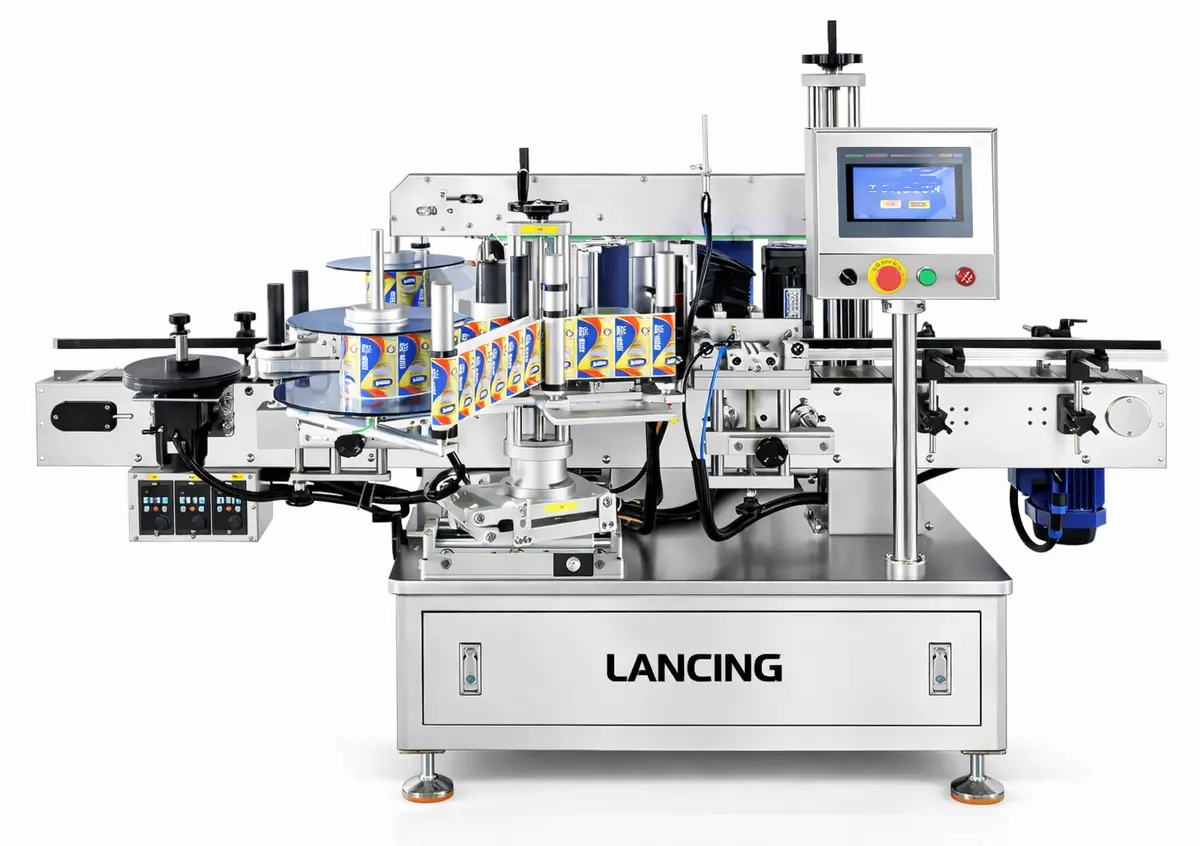
Select the application method from the surface that must receive the label: round wraparound, front and back, flat surface, top, bottom or another controlled position. Then confirm container geometry and stability, label size and construction, backing web, roll winding, placement target and line presentation. Production-intent samples are required because print, varnish, adhesive and container surface can change application behaviour.

Use this guide to prepare a decision

  • Define the product and packaging components that will actually run.
  • State the required production result and how it will be verified.
  • Include changeover, cleaning, supply, discharge and line-control conditions.
  • Confirm suitability with representative samples before final selection.
Selection framework

Turn the question into a testable machinery requirement.

These factors help suppliers compare the same application and make assumptions visible before equipment is selected.

Inputs that determine labelling feasibility

InterfaceWhat to checkWhy it matters
Container surfaceRound, tapered, flat, faceted, flexible or compound curve.Determines how the pack is controlled during application.
Label constructionMaterial, stiffness, adhesive and liner release.Determines dispensing and wipe-down behaviour.
Roll specificationCore, web width, gap and winding direction.Determines compatibility with the label head.
Placement targetPosition, orientation and allowable variation.Determines sensors, fixtures and product control.
Production conditionSurface cleanliness, temperature, speed and pack stability.Determines practical adhesion and repeatability.

Container control is part of label placement

A sensor can trigger accurately while the label still moves if the container is rotating, leaning or slipping. Side belts, wrap stations, fixtures or spacing screws may be needed to control the pack. Filled weight and liquid movement can make the production container behave differently from an empty sample.

Use production-intent label rolls

A sample printed on different material or wound in another direction may not prove the final application. Provide the actual label gap, core, roll diameter, web width, winding and adhesive. Mark the required leading edge and orientation if the artwork is directional.

Trial and quotation checklist

  • Every container size, filled where weight affects handling.
  • Production-intent label rolls and technical specification.
  • Required label position and orientation reference.
  • Expected output and upstream product spacing.
  • Environmental conditions and time before adhesion is checked.
Common buyer questions

Answers about label application guide.

Each answer states the practical variables that should be confirmed for the actual product, pack and production environment.

Can a wraparound labeller handle tapered bottles?

A tapered bottle can cause a rectangular label to track up or down and crease because the surface circumference changes. Some taper can be managed with product control or a suitably designed label, but the bottle and artwork should be assessed together rather than treated as a standard round application.

Can clear labels be detected reliably?

Clear labels may require a sensor designed for the label and liner combination. Detection depends on material, gap, print and backing. Provide a production-intent roll for testing and avoid assuming that a sensor used for opaque labels will behave the same.

How is orientation to a feature achieved?

Orientation may use a printed mark, container seam, handle, lug, existing label or mechanical feature. The feature must be detectable and repeatable, and the machine needs enough control to rotate or locate the container before application. State the acceptable relationship between the feature and label.

Why does label winding direction matter?

Winding direction determines which edge and face of the label reaches the dispensing point. The label head must present the adhesive side and artwork orientation correctly. A production roll wound differently from the trial roll can require mechanical changes or make the setup unusable.

What causes labels to lift after application?

Label lift can result from surface contamination, low surface energy, curvature stress, unsuitable adhesive, temperature, trapped air or insufficient contact pressure. The labelling machine can control application, but label and container compatibility should also be confirmed with the material suppliers.

Prepare an application-specific enquiry

Send the product, packaging components, target output, current process and any layout or interface information. Lancing can use the details to identify the next trial, machine category or integration review.

CallContact