UK packaging automation projects01494 623015sales@lancinguk.com
Closure application guide

How do you match a capping machine to a closure and container?

The closure, container neck and application method form one system. Reliable capping needs consistent components, controlled presentation and suitable support during application.

How do you match a capping machine to a closure and container?
Direct answer

How do you match a capping machine to a closure and container?

Begin with the closure application principle: screw, press-on, trigger or pump, ROPP, crown or another defined method. Then assess closure geometry and handling, the container neck finish, height and rigidity, the required finished condition and whether closures need automatic orientation and feeding. Representative component samples are essential because nominal dimensions do not show every tolerance and handling behaviour.

Use this guide to prepare a decision

  • Define the product and packaging components that will actually run.
  • State the required production result and how it will be verified.
  • Include changeover, cleaning, supply, discharge and line-control conditions.
  • Confirm suitability with representative samples before final selection.
Selection framework

Turn the question into a testable machinery requirement.

These factors help suppliers compare the same application and make assumptions visible before equipment is selected.

Compatibility checks before machine selection

InterfaceWhat to checkWhy it matters
Closure applicationThreaded, pressed, rolled, crimped or otherwise formed.Determines the capping head and process.
Closure handlingShape, orientation, nesting, tangling and surface sensitivity.Determines feeding and transfer method.
Container supportBase, body and neck strength; available gripping area.Determines side belts, starwheel, chuck support or fixtures.
Finished conditionSeated height, torque, seal engagement or visible position.Determines setup and quality verification.
Component rangeSmallest, largest and tolerance variation.Determines tooling, guides and changeover.

Treat the neck finish as a functional interface

The thread, bead, flange or sealing surface must match the closure and remain accessible to the capping head. Product contamination, flash, ovality or height variation can affect application. Obtain drawings where available, but still test production-intent components.

Cap feeding is a separate engineering task

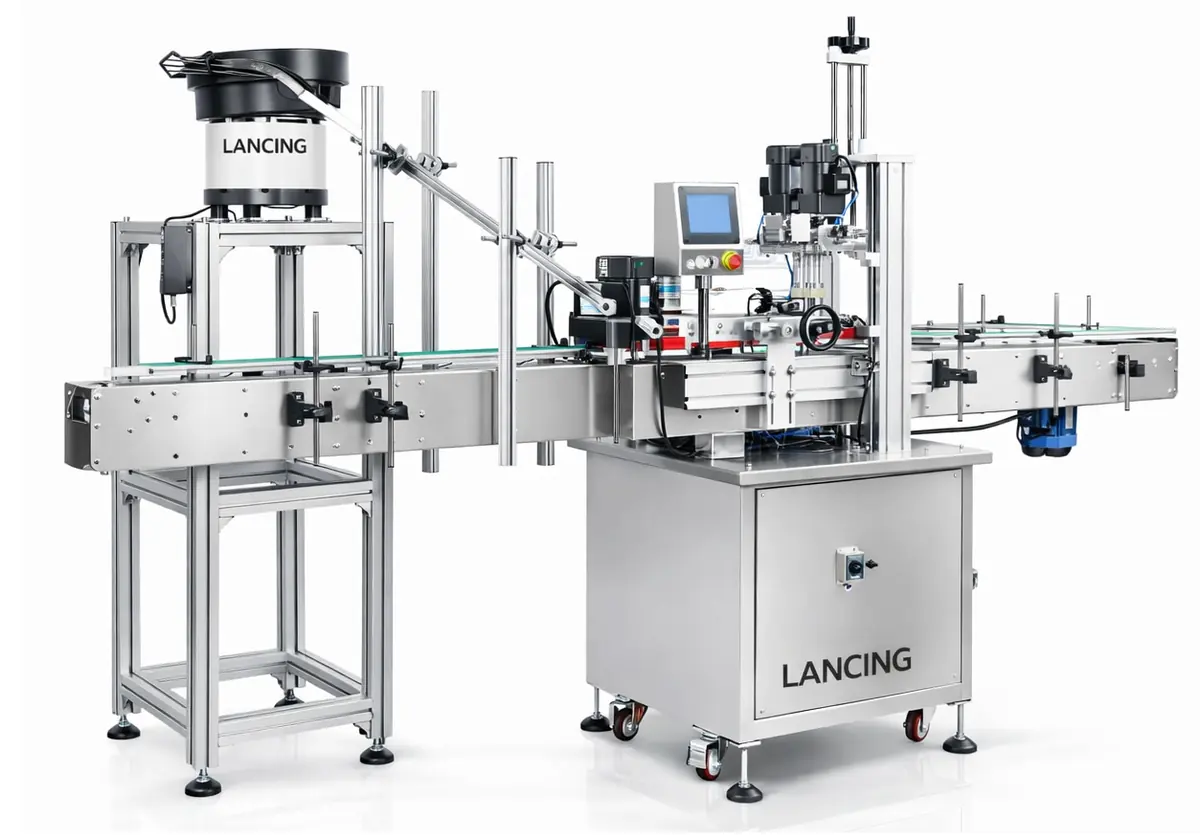
An automatic capper needs closures delivered in the correct orientation without damage. Bowls, elevators and other feeders depend on closure geometry and behaviour in bulk. Triggers, pumps and long components can tangle or require controlled presentation, while small caps may overlap or invert.

Sample set for capping evaluation

  • Empty and filled containers across the intended range.
  • Sufficient loose closures from production-intent supply.
  • Closure and neck drawings where available.
  • Required finished check and any current quality issue.
  • Product information if the neck may be wet, foamy or contaminated.
Common buyer questions

Answers about closure application guide.

Each answer states the practical variables that should be confirmed for the actual product, pack and production environment.

Can one capping machine apply several closure types?

A machine may cover related closure sizes or formats with change parts and settings, but fundamentally different application methods usually need different heads or machines. Confirm every closure, container and required changeover rather than assuming a diameter range is the only limitation.

Why can trigger pumps be difficult to feed?

Trigger pumps are asymmetric, long and prone to tangling. The dip tube, trigger head and closure body must be oriented without damage and transferred to the bottle reliably. Sample quantity and actual dip-tube length are important when assessing a feeder.

What if bottles come from more than one supplier?

Include approved samples from each supplier and understand the permitted neck and height tolerances. Tooling and guides should be assessed against the combined range. A change that is acceptable to the packaging supplier may still alter automatic handling or closure engagement.

What is the difference between applying and tightening a cap?

Applying a cap includes presenting and engaging it correctly with the container. Tightening controls the final seated condition. A closure can reach a torque value while being cross-threaded or otherwise incorrectly engaged, so alignment and visual or functional checks remain important.

How should capping quality be checked?

The check should match the closure function. It may include seated height, application torque, removal torque, seal engagement, leak performance or visible alignment. Define the test method, timing and sample condition because some results change after application or with product exposure.

Prepare an application-specific enquiry

Send the product, packaging components, target output, current process and any layout or interface information. Lancing can use the details to identify the next trial, machine category or integration review.

CallContact